
86-025-5119 7362

When a fluid transfer system needs both chemical resistance and visual monitoring, tubing material becomes more than a simple connection between two components. The tubing must withstand the properties of the fluid while allowing operators and engineers to see what is happening inside the line. This is where clear teflon tubing can offer a useful combination of transparency, chemical resistance, temperature capability, and low-friction fluid handling.
Unlike opaque tubing, transparent PTFE tubing allows the condition of the fluid path to be observed without disconnecting the system. Bubbles, unexpected discoloration, suspended particles, incomplete filling, and changes in flow can often be identified directly through the tube. At the same time, PTFE is known for its broad chemical resistance, making it suitable for many demanding laboratory, analytical, pharmaceutical, chemical, and industrial fluid-handling applications.
However, visibility alone does not determine whether a tubing solution is appropriate. The fluid, operating temperature, pressure, dimensions, fittings, and installation conditions all need to be considered. Working with experienced teflon tube suppliers can therefore be useful when the tubing needs to meet several performance requirements at the same time.
The most obvious advantage of clear teflon tubing is that it makes the inside of the fluid path visible. In a conventional opaque tube, an operator may know that fluid is supposed to be moving but cannot directly see whether the line is completely filled, whether air has entered the system, or whether an unexpected obstruction is developing.
Transparent tubing changes this situation. During fluid transfer, the operator can observe the movement of the liquid through the tube and compare what is physically happening with the expected operating condition. This can be particularly useful during system startup, priming, flushing, dosing, and troubleshooting.
Visibility can also reduce the time required to identify certain problems. If a line suddenly contains visible bubbles, for example, the operator has an immediate indication that the fluid path may not be functioning as intended. Similarly, an unexpected change in fluid appearance can indicate contamination, chemical reaction, or another process issue that requires investigation.
This does not mean that visual inspection replaces pressure monitoring, flow measurement, or other instrumentation. Instead, clear teflon tubing provides an additional source of real-time information without requiring the fluid path to be opened.
Transparency is valuable only if the tubing remains stable in contact with the fluid being transferred. Chemical compatibility is therefore one of the first factors to consider when selecting clear teflon tubing.
PTFE has a reputation for broad chemical resistance, which is one reason it is widely used in demanding fluid-handling environments. Its resistance to many acids, bases, solvents, and other aggressive chemicals can make it suitable for applications where less chemically resistant tubing materials may swell, soften, become brittle, or otherwise deteriorate.
Even so, no tubing material should be considered universally compatible with every chemical under every condition. Concentration, temperature, exposure time, pressure, and the presence of mixtures can all influence material performance. Compatibility should therefore be evaluated against the actual fluid and operating conditions rather than based solely on the generic name of the tubing material.
This is particularly important when selecting tubing for analytical or chemical systems where a small amount of material degradation or contamination could affect the process. Experienced teflon tube suppliers can help users identify the relevant material and dimensional considerations when the application involves aggressive or less familiar fluids.
One of the practical benefits of transparent tubing is that it allows users to observe conditions that would otherwise remain hidden inside the fluid line. The exact information available depends on the fluid and system, but several common visual changes can be useful during operation.
Air bubbles are one of the easiest conditions to identify. In applications where a continuous liquid path is important, visible bubbles may indicate incomplete priming, a connection problem, gas entering the system, or another upstream issue. Being able to see the bubbles can make troubleshooting considerably more direct.
Operators may also be able to observe whether the tube is filling as expected, whether liquid is moving through a section of the system, or whether material has accumulated within the line. Changes in color or clarity may provide an early indication that the fluid itself has changed.
| Condition Observed | What the Operator May Notice | Possible Significance |
|---|---|---|
| Air entering the line | Visible bubbles or discontinuous liquid column | May indicate air ingress, poor priming, or connection issues |
| Normal fluid transfer | Continuous movement of the expected fluid | Provides visual confirmation of flow through the tubing |
| Unexpected particles | Suspended or deposited material | May require investigation of contamination or upstream conditions |
| Fluid discoloration | Visible change in fluid appearance | May indicate a process change, contamination, or chemical reaction |
| Incomplete filling | Unfilled sections or separated fluid areas | May indicate priming or pressure-related issues |
These visual observations are especially useful during commissioning and maintenance. Instead of immediately disassembling the system to determine what is happening inside the tube, operators can first inspect the visible fluid path.
PTFE is valued for its ability to operate across a broad temperature range, but the actual temperature capability of a tubing assembly depends on more than the polymer itself. Tube dimensions, pressure, fittings, support conditions, cycling frequency, and the specific product construction all influence how the assembly should be used.
As temperature changes, the mechanical behavior of polymer tubing also changes. At elevated temperatures, material properties such as stiffness and dimensional stability can differ from those observed at room temperature. Pressure capability must therefore be evaluated together with temperature rather than treating the two conditions independently.
The same principle applies to pressure. A tube that performs appropriately in a low-pressure transfer line may require a different design or support arrangement when used under more demanding pressure conditions. Connections are also important because the tubing and fitting must work together as a complete assembly.
For this reason, users should avoid selecting clear teflon tubing solely because PTFE has a generally high temperature or chemical-resistance reputation. The specific tubing specification should be checked against the actual operating environment.
When the application involves unusual combinations of temperature, pressure, chemical exposure, and dimensional requirements, discussing the conditions directly with qualified teflon tube suppliers can help prevent an inappropriate selection.
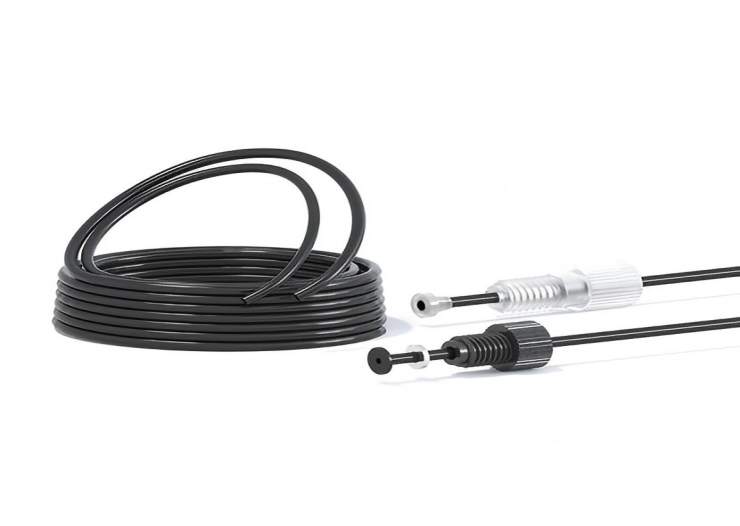
The combination of transparency and chemical resistance makes clear teflon tubing useful in applications where both fluid compatibility and visual access to the process are important.
Laboratory equipment is one common example. Researchers may need to transfer solvents, reagents, samples, or other liquids while observing whether the line is properly filled and free from visible contamination or bubbles. Transparent tubing can simplify setup and troubleshooting without compromising the chemical resistance expected from a PTFE-based material.
Analytical instrumentation can present similar requirements. Small fluid paths may need to remain clean and chemically stable while operators need to confirm that liquid is moving correctly through the system. In such environments, the ability to visually inspect the tubing can be particularly useful during installation and maintenance.
Chemical processing and fluid-handling equipment can also benefit when the transferred material is compatible with PTFE and visual inspection provides operational value. The exact suitability still depends on the chemical, temperature, pressure, tubing dimensions, and connection method.
Runze Fluid provides fluid-handling solutions for applications where tubing is part of a broader pumping and liquid-management system. Reviewing the Runze Fluid product range can be useful when the tubing needs to be considered together with pumps, fluid-control components, or other parts of the transfer system rather than selected as an isolated component.
The right tubing should begin with the fluid rather than the appearance of the tube. Identify the chemical composition, concentration, viscosity, temperature, and any other characteristics that could affect material compatibility. Once the fluid requirements are established, the mechanical conditions of the system can be evaluated.
Tube dimensions are another important consideration. Inside diameter affects fluid velocity and pressure drop, while outside diameter influences fitting compatibility and mechanical support. Wall thickness can also affect pressure capability and the overall flexibility of the tubing.
The expected operating temperature and pressure should be considered at the same time. If the system experiences temperature cycling, pressure fluctuations, or repeated bending, those conditions should be included in the selection process rather than relying on nominal laboratory conditions.
Transparency should also be evaluated according to the actual monitoring requirement. If the primary purpose is to identify bubbles or confirm fluid movement, a clear tube can provide substantial practical value. If the fluid itself is opaque, highly colored, or otherwise difficult to see through, transparency may offer less benefit than expected.
Finally, consider how the tubing will connect to the rest of the system. A chemically compatible tube can still perform poorly if the fitting arrangement causes excessive stress, leakage, restriction, or an unreliable seal.
For straightforward applications, standard tubing specifications may be sufficient. For more demanding systems, providing the operating fluid, temperature, pressure, required dimensions, and connection details to experienced teflon tube suppliers can make the selection process more precise. If the tubing is being integrated into a complete fluid-handling system, contacting Runze Fluid with the application requirements can help determine how the tubing should work with the rest of the system.
Clear teflon tubing is useful when a fluid-handling system needs more than chemical resistance alone. Its transparency allows operators to see the fluid path, identify bubbles, observe unexpected changes, and confirm whether fluid is moving through the line as expected. At the same time, PTFE's chemical resistance makes it suitable for many demanding fluid-transfer environments.
Its suitability, however, should always be determined by the complete application. Fluid compatibility, temperature, pressure, tube dimensions, fittings, mechanical conditions, and the actual need for visual monitoring all influence the final selection. Rather than choosing tubing based on transparency or material name alone, users should evaluate how the tube will perform as part of the complete fluid-transfer system.
For applications where chemical resistance and fluid visibility need to work together, clear teflon tubing can provide a practical balance between material performance and day-to-day process visibility. Working with knowledgeable teflon tube suppliers can further simplify the process when the application has specific chemical, dimensional, or operating requirements.
Clear Teflon tubing is commonly used for fluid transfer applications where chemical resistance and visibility of the fluid path are both important, including laboratory, analytical, chemical, and industrial systems.
Yes. One of the main practical benefits of clear tubing is that operators can visually identify air bubbles, incomplete filling, and other changes inside the fluid path.
PTFE offers broad resistance to many chemicals, but compatibility depends on the specific chemical, concentration, temperature, exposure conditions, and application. These factors should be checked before selection.
Yes. Temperature can affect the mechanical properties and pressure capability of polymer tubing. The manufacturer's specifications should be checked for the actual operating temperature and pressure conditions.
Consider the fluid, chemical compatibility, operating temperature, pressure, inside and outside diameter, wall thickness, flexibility, fittings, and the type of visual monitoring required.
Experienced teflon tube suppliers can help match tubing material and dimensions to the fluid, pressure, temperature, connection method, and other requirements of the complete transfer system.



 English
 日本語
日本語 한국어
한국어 français
 Deutsch
 Español
 italiano
 русский
 português
 Türkçe
 Nederland