
86-025-5119 7362

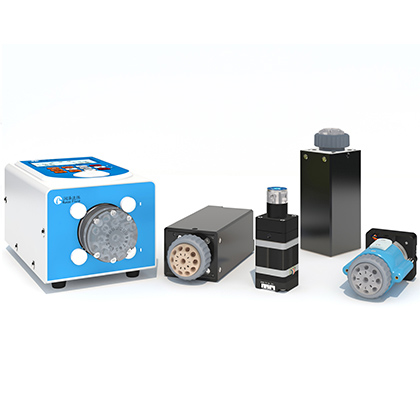
An SY-09 syringe pump flow rate problem may appear as slower delivery, alternating fast and slow movement, or a noticeable mechanical hesitation. Those symptoms do not identify one cause. The sales experience recommends checking the piston and syringe fit, foreign matter or crystallization, and lubrication when the motion feels stuck. It also warns engineers to separate mechanical faults from four other groups: communication commands, syringe specification, fluid properties, and the power environment. A disciplined diagnosis prevents an unnecessary pump replacement and produces evidence that technical support can use.
This guide combines that field experience with the published SY-09 catalog data for the 3 mL and 8 mL versions. It explains which parameters can be verified, how to isolate the fluid path from the motion system, and where the source documents do not provide enough information for a numerical conclusion. The goal is to restore a repeatable test condition before deciding whether the cause is setup, process, wear, contamination, or hardware damage.
Start by preserving the evidence: record a video, the exact command or program, syringe capacity, speed setting, liquid, run time, installation orientation, pressure conditions, and power supply. Then test in layers. Confirm that the 3 mL or 8 mL parameters are correct, inspect the fluid path for trapped gas, blockage, leakage, or changing backpressure, and observe whether the motor and lead screw move smoothly without a load. If the pump hesitates, inspect the piston-to-syringe fit, deposits, crystallization, contamination, and lubrication state. Clean only with an approved method, reassemble, and repeat a controlled volume test. Escalate if abnormal noise, binding, damage, or unstable movement remains.
The SY-09 is offered in 3 mL and 8 mL capacities. Both use a trapezoidal lead screw with a 1 mm lead and a published control resolution of 0.005 mm. The capacity changes the stroke, control-step count, maximum speed, minimum injection increment, glass-tube diameter, listed backpressure, and full-stroke travel time. Using the wrong capacity or motion assumptions in host software can therefore create an apparent flow error even when the pump moves consistently. Confirm the nameplate and ordered model before comparing commands with expected output.
Parameter | SY-09 3 mL | SY-09 8 mL |
Capacity | 3 mL | 8 mL |
Rated stroke | 18 mm and 3,600 steps | 19.2 mm and 3,840 steps |
Maximum speed | 600 rpm | 300 rpm |
Linear speed | 0.017 to 10 mm/s | 0.017 to 5 mm/s |
Rated-stroke time | 1.8 to 1,080 s | 3.84 to 1,152 s |
Control resolution and minimum injection increment | 0.005 mm and 0.833 uL | 0.005 mm and 2.083 uL |
Glass-tube inner diameter | 14.55 mm | 23.03 mm |
Published backpressure | 1.5 MPa | 0.89 MPa |
Weight | 0.56 kg | 0.62 kg |
The catalog lists liquid-volume accuracy error of no more than 1% and repeatability error of 0.3% to 0.7%, both at the rated stroke. It also lists a three-million-cycle no-leak test with pure water, counting one rated stroke as one cycle. These values are useful reference points, but they do not establish the same performance for every partial stroke, viscous liquid, pressure, tube layout, or wear condition. Diagnose the customer's actual cycle rather than comparing an arbitrary short dispense directly with the rated-stroke claim.
A useful fault tree separates causes that can create similar symptoms. Work through the groups in an order that preserves evidence and avoids changing several variables at once.
Cause Group | Examples | First Check |
Configuration | Wrong capacity, speed, stroke, acceleration, or volume calculation | Compare the ordered model and command values with the 3 mL or 8 mL catalog data |
Communication | Incomplete, delayed, repeated, or unintended commands | Capture transmitted commands and returned responses with timestamps |
Fluid path | Air, leakage, restriction, crystallization, valve timing, or variable pressure | Inspect, prime, isolate sections, and measure output under a controlled path |
Mechanical | Piston drag, contamination, wear, misalignment, or poor lubrication | Observe motion and sound unloaded, then inspect approved service points |
Power and environment | Supply drop, connector issue, grounding, condensation, or out-of-range ambient conditions | Measure supply at the pump during motion and inspect connections |
Ask when the change began, whether it followed a liquid change, cleaning cycle, maintenance event, firmware or parameter update, long idle period, or relocation. Record whether the problem occurs during aspiration, dispensing, both directions, only near one end of travel, only at high speed, or only when a valve switches. A problem that repeats at the same position suggests a different investigation from a problem that follows one reagent or one pressure state.
Collect a clear video that includes the piston movement, sound, command timing, and any connected valve. Save the programmed values and returned messages. Record cumulative operating time and the full list of transported media, especially liquids that are viscous, abrasive, prone to crystallize, or likely to dry into deposits. The sales experience specifically asks for running time, media history, images or video, and parameter settings before technical escalation.
Confirm that the host applies the correct capacity-dependent conversion. The 3 mL unit uses 3,600 steps over 18 mm, while the 8 mL unit uses 3,840 steps over 19.2 mm. Their listed minimum injection increments also differ. A command sequence developed for one capacity should not be assumed to produce the same volume on the other. Review the complete motion profile, including acceleration, deceleration, pauses, direction changes, and any backlash or priming compensation used by the host.
The catalog states that the pump supports a default proprietary protocol and is compatible with ASCII and Modbus. The RS232 and RS485 bus rates listed are 9,600, 19,200, 38,400, 57,600, and 115,200 bps. Confirm baud rate, address, message format, terminators, response handling, and retry logic. A command problem can look mechanical if pauses or repeated instructions occur between motion segments. Do not adjust mechanics until the command trace shows that the intended motion was actually requested.
Prime the line and look for bubbles, loose fittings, wet joints, tube collapse, blocked filters, partially switched valves, and crystallized residue. The SY-09 uses a 1/4-28 UNF female fluid interface. A fitting can be mechanically attached yet still introduce restriction, leakage, or dead volume if the tube size, ferrule, or seating depth is wrong. Test with a known, controlled fluid path before concluding that the drive is slow.
Compare the process pressure with the correct capacity. The catalog lists backpressure of 1.5 MPa for the 3 mL version and 0.89 MPa for the 8 mL version under the documented product conditions. It also gives fluid-path reference values of positive pressure from 0 to 0.5 MPa and negative pressure from 0 to 0.06 MPa, with holding time subject to the test. These figures do not provide a universal flow-pressure curve for a customer's liquid. Data not available in source documents. Measure the real system and reproduce the symptom at a controlled pressure.
If motion remains uneven after configuration and fluid-path checks, observe the drive with the process load safely removed according to the equipment service procedure. Look for hesitation at a repeatable position, changing motor sound, excessive drag, looseness, misalignment, or visible damage. The sales experience links an uneven flow and a stuck feeling to the piston and syringe fit, foreign matter or crystallization, lubrication condition, and possible mechanical wear.
Clean only the accessible parts and methods approved for the product and process. The source documents do not specify a universal lubricant type, lubricant quantity, service interval, or cleaning chemical for this troubleshooting scenario. Data not available in source documents. Using an unapproved lubricant or solvent can alter seals, contaminate the fluid path, or hide the original cause. If the approved service information is unavailable, stop and request technical guidance with the collected evidence.
The catalog lists DC 24 V at 3 A, rated power of 15 W, an ambient operating range of 5 to 55 C, and relative humidity of no more than 80% in a non-condensing state. Measure voltage at the pump connector while the axis is moving; a bench supply reading without load may miss a cable or connector voltage drop. Inspect grounding and connectors because the product design includes a ground point to improve interference resistance. Keep this check distinct from liquid temperature or chemical compatibility, which are not defined by the ambient rating.
After correcting one identified issue, reassemble the system and repeat a defined test. A useful verification sequence is:
1. Use the confirmed syringe capacity and record the exact command sequence, speed, stroke, direction, and number of cycles.
2. Use a stable test liquid and a fully primed path with the same valve and tubing arrangement for every repeat.
3. Measure delivered mass or volume with a suitable calibrated method and keep temperature and timing consistent.
4. Run enough repeats to distinguish a consistent offset from random variation or intermittent hesitation.
5. Repeat at the process pressure and with the real liquid after the controlled baseline passes.
6. Document the condition before and after the intervention, including video, settings, measured results, and remaining abnormal behavior.
If the axis still binds, if output remains unstable under a controlled path, or if mechanical damage is visible, stop repetitive testing and contact technical support. Include the product code, serial information if available, cumulative run time, liquid history, command log, video, power measurement, fluid-path diagram, and test results. That package allows the next review to focus on the fault rather than repeat basic data collection.
Why can the SY-09 run slower after a period of use?
Possible causes include changed settings, higher fluid resistance, trapped gas, crystallized deposits, piston drag, lubrication condition, wear, power delivery, or unintended commands. The symptom alone does not identify which cause is present.
What should be collected before contacting technical support?
Provide a video or clear photos, the exact parameters and commands, pump model and capacity, cumulative run time, transported media, pressure and tubing details, power measurement, and the point in the cycle where the symptom occurs.
Are the 3 mL and 8 mL SY-09 settings interchangeable?
No. The two versions have different stroke lengths, control-step counts, maximum speeds, minimum injection increments, glass-tube diameters, and published backpressure. Use the parameters for the installed capacity.
What accuracy does the SY-09 catalog state?
The catalog lists volume accuracy error of no more than 1% and repeatability error of 0.3% to 0.7% at the rated stroke. It does not publish the same result for every short stroke, liquid, pressure, or aged condition.
Can a communication issue look like a flow problem?
Yes. Wrong capacity conversion, baud rate, address, message framing, pauses, retries, or repeated commands can change observed motion. Capture both sent commands and returned responses before changing mechanical parts.
What lubricant should be used on the SY-09?
The reviewed sources do not specify a universal lubricant type or quantity for this troubleshooting task. Data not available in source documents. Follow the controlled service documentation or ask RUNZE technical support before applying lubricant.
When should the pump be removed from service?
Stop testing when there is persistent binding, abnormal noise, visible damage, leakage, unstable motion under a controlled load, an electrical fault, or a condition outside the verified pressure, power, or environmental limits.
An SY-09 syringe pump flow rate complaint should be treated as a system diagnosis. Confirm the 3 mL or 8 mL configuration, preserve command and video evidence, stabilize the fluid path, and then inspect motion, deposits, lubrication condition, power, and grounding. Use the published accuracy and repeatability only under their rated-stroke condition, and keep capacity-specific speed and pressure data attached to the correct model. If cleaning and a controlled baseline do not restore smooth, repeatable delivery, escalate with a complete evidence package rather than continuing to run a binding mechanism.


 English
 日本語
日本語 한국어
한국어 français
 Deutsch
 Español
 italiano
 русский
 português
 Türkçe
 Nederland