
86-025-5119 7362

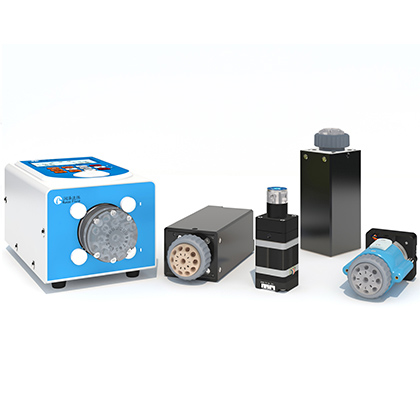
In fluid handling systems, unexpected maintenance is often caused not by a single component failure, but by design limitations that appear over long periods of operation. Equipment used in laboratory automation, medical devices, chemical processing, and industrial applications must maintain stable performance while reducing downtime, replacement frequency, and operational interruptions. This makes pump design an important factor in long-term system reliability.
A properly engineered OEM peristaltic pump can help address many common maintenance challenges by improving component compatibility, simplifying integration, and providing more consistent fluid control. Unlike standard pump solutions designed for general applications, OEM configurations are developed around the specific requirements of an equipment system, allowing manufacturers to optimize performance, durability, and serviceability from the beginning.
For applications requiring adjustable flow performance, an OEM variable speed peristaltic pump provides additional flexibility by allowing equipment designers to match fluid delivery rates with changing operational conditions. By combining precise speed control with maintenance-friendly design principles, OEM peristaltic pump solutions can help create more reliable and efficient fluid management systems.
Runze Fluid focuses on developing precision fluid control solutions that support different equipment requirements. Through optimized pump structures and application-oriented designs, manufacturers can build systems that achieve stable operation while reducing the complexity associated with long-term maintenance.
Downtime can significantly affect equipment efficiency, especially in systems where fluid delivery is a critical process. Traditional pump problems often come from factors such as tubing wear, inconsistent flow performance, difficult component replacement, or limited compatibility with the surrounding system.
An OEM peristaltic pump addresses these challenges by allowing pump characteristics to be designed according to the specific working environment. Factors such as mounting structure, tubing requirements, motor selection, control methods, and communication interfaces can be considered during the design process.
This approach helps reduce unnecessary adjustments during installation and operation. When a pump is designed to match the equipment architecture, integration becomes smoother and maintenance procedures become more straightforward. Engineers can also reduce potential failure points by selecting components that are suitable for the expected workload.
For systems that require frequent flow adjustments, an OEM variable speed peristaltic pump provides better operational flexibility. Variable speed control allows users to adapt flow output based on process requirements rather than relying on fixed-speed operation, which can improve system efficiency and reduce excessive mechanical stress.
| Comparison Factor | Standard Peristaltic Pump | OEM Peristaltic Pump Solution |
|---|---|---|
| Design Approach | Designed for general applications with standard specifications | Designed according to specific equipment and application requirements |
| System Integration | May require additional adjustments during installation | Optimized for easier integration with existing equipment |
| Maintenance Considerations | Limited customization for long-term service needs | Can include maintenance-friendly structures and component choices |
| Flow Control | Depends on standard operating parameters | Can support precise control through customized configurations |
| Application Flexibility | Suitable for common fluid transfer tasks | Suitable for specialized laboratory, medical, and industrial systems |
Long-term pump reliability depends on more than motor performance or initial flow accuracy. The internal structure, material selection, and mechanical design all influence how well a pump performs after extended operation.
A well-designed OEM peristaltic pump considers factors such as roller or rotor structure, pressure control, tubing compatibility, and heat management. These details help maintain consistent compression and reduce unnecessary stress on key components.
The pump housing design also plays an important role. A stable mechanical structure can reduce vibration, protect internal components, and improve operational consistency. For equipment manufacturers, these design considerations can translate into fewer service requirements and more predictable system performance.
Another important advantage of OEM design is the ability to optimize the relationship between the pump and the application environment. For example, equipment operating continuously may require different design considerations compared with systems used intermittently. Custom engineering allows the pump configuration to better match real operating conditions.
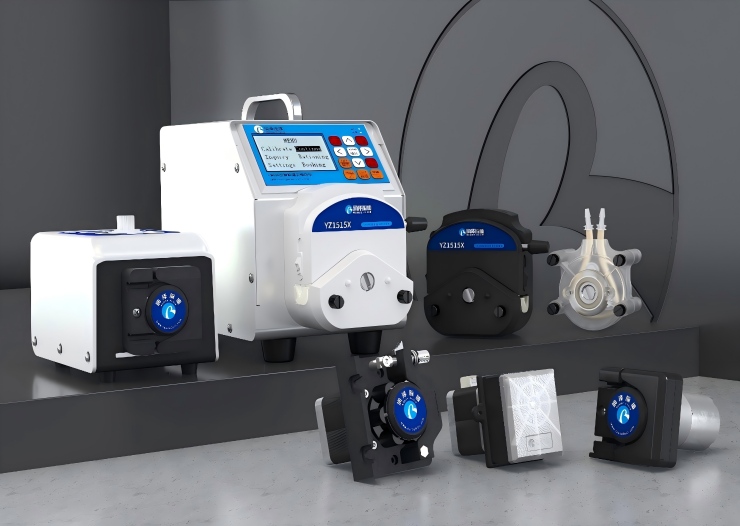
In peristaltic pump systems, tubing is one of the most important factors affecting maintenance requirements. Because the tubing directly interacts with the pumping mechanism and fluid, its material properties, flexibility, and durability influence both performance and service life.
An OEM peristaltic pump allows engineers to select tubing and related components based on the actual application requirements. Factors such as chemical compatibility, operating temperature, pressure conditions, and fluid characteristics can be considered to reduce premature wear.
Optimized component selection also helps protect the pump mechanism. When tubing characteristics match the pump structure, the system can maintain stable compression while reducing unnecessary mechanical load on rollers, motors, and drive components.
For applications requiring frequent adjustments in fluid delivery, an OEM variable speed peristaltic pump provides additional control. By adjusting operating speed instead of forcing the pump to work under unsuitable conditions, users can better balance flow requirements and component durability.
Maintenance efficiency is often determined before equipment enters operation. A pump that is difficult to install, access, or replace can increase service time and create unnecessary operational challenges.
OEM configurations allow equipment designers to consider maintenance requirements during the development stage. Pump dimensions, mounting methods, electrical connections, and control interfaces can be optimized to fit the final equipment design.
This level of integration reduces the need for external modifications and makes future servicing more convenient. Instead of adapting a standard pump to a specialized system, an OEM approach creates a solution that naturally fits the equipment.
Runze Fluid provides different pump configurations designed for diverse application environments. Engineers can review available fluid handling solutions through the Runze Fluid product portfolio to better understand suitable pump options for their equipment requirements.
Stable fluid delivery is essential for equipment that requires repeatable performance. Variations in flow rate can affect process accuracy, especially in applications involving analysis, dosing, dispensing, or automated testing.
An OEM variable speed peristaltic pump improves operational stability by allowing precise adjustment of pump speed according to process requirements. This enables equipment manufacturers to achieve better control over fluid movement while supporting changing operating conditions.
Smart integration also plays an increasing role in modern fluid systems. Communication capabilities, control interfaces, and automation compatibility allow pumps to work more effectively within complete equipment platforms.
By combining precise flow control with application-specific design, OEM peristaltic pumps can support more reliable equipment operation and reduce the need for frequent manual adjustments.
Durable equipment is created through careful attention to every component that contributes to system performance. A pump that operates reliably over time helps manufacturers deliver equipment with improved stability and reduced service demands.
An OEM peristaltic pump provides advantages by allowing performance requirements, mechanical structure, and integration needs to be considered together. Instead of treating the pump as an isolated component, OEM design makes it part of the complete fluid management system.
For equipment manufacturers, this approach can improve product reliability, simplify maintenance processes, and create better user experiences. Whether the application requires a compact pump for laboratory equipment or an adjustable-speed solution for industrial systems, the right configuration can significantly influence long-term performance.
Runze Fluid works with customers to develop fluid control solutions based on practical application needs. When specific technical requirements need further discussion, manufacturers can contact the Runze Fluid team through the contact page to explore suitable OEM pump configurations.
Maintenance challenges in fluid handling systems are often connected to pump design decisions made at the beginning of equipment development. A properly designed OEM peristaltic pump can help reduce downtime by improving integration, optimizing component selection, and supporting more stable operation.
For applications requiring flexible flow adjustment, an OEM variable speed peristaltic pump provides additional control capabilities that help equipment adapt to different operating conditions. By selecting a pump solution that matches the specific needs of the system, manufacturers can improve durability, simplify maintenance, and create more reliable equipment.
As fluid systems continue to become more automated and application-specific, OEM pump design will remain an important approach for achieving long-term performance and operational efficiency.
An OEM peristaltic pump is a pump solution designed and configured according to specific equipment requirements, including structure, control, and integration needs.
It reduces maintenance needs through optimized design, suitable component selection, easier integration, and improved long-term reliability.
An OEM variable speed peristaltic pump allows adjustable flow control, helping equipment achieve more precise operation under different conditions.
Tubing affects chemical compatibility, wear resistance, and pumping performance, making it a key factor in long-term operation.
Yes. OEM configurations can include suitable control interfaces and mechanical designs for integration into automated systems.
The selection should consider flow requirements, operating conditions, tubing compatibility, control needs, and equipment integration requirements.


 English
 日本語
日本語 한국어
한국어 français
 Deutsch
 Español
 italiano
 русский
 português
 Türkçe
 Nederland