
86-025-5119 7362

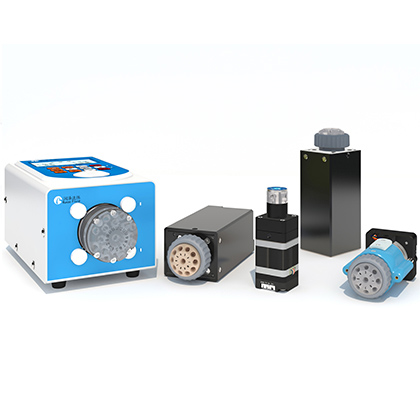
Tubing material directly influences fluid transfer accuracy in microfluidic systems by affecting flow stability, chemical compatibility, adsorption behavior, dimensional consistency, and pressure response. A suitable Fluid Tubing material helps maintain precise flow rates, minimize sample loss, and ensure reliable performance in applications such as laboratory automation, analytical instruments, medical diagnostics, and biological research.
In microfluidic systems, even small variations in tubing properties can create measurable errors. Material selection is not only about flexibility or chemical resistance; it determines how accurately fluids move through the entire system. Factors such as inner diameter tolerance, surface characteristics, permeability, and interaction with transported liquids must be evaluated together with pump performance and system requirements.
Microfluidic systems often operate with extremely small fluid volumes, where minor changes in flow conditions can significantly affect test results. The tubing connecting pumps, valves, sensors, and reaction chambers becomes an important part of the fluid control pathway.
Different tubing materials respond differently under pressure, temperature changes, and chemical exposure. For example, a tubing material with high elasticity may expand slightly during pressurization, causing delays or fluctuations in fluid delivery. A material with strong adsorption characteristics may absorb proteins or biological samples, reducing concentration accuracy.
The main material-related factors affecting fluid transfer precision include:
Dimensional stability under pressure
Internal surface smoothness
Chemical compatibility with transported fluids
Gas permeability
Flexibility and recovery after deformation
Resistance to repeated connection and disconnection
For precision applications, liquid tubing must maintain consistent internal geometry throughout operation. Any change in tubing performance can influence flow calibration and system repeatability.
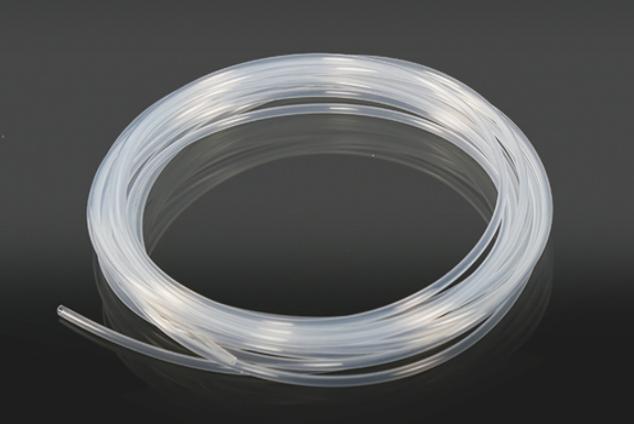
Tubing inner diameter is one of the most critical parameters affecting flow accuracy because microfluidic systems rely on controlled fluid displacement.
According to fluid dynamics principles, flow resistance increases significantly when tubing diameter decreases. Small variations in inner diameter can therefore create noticeable differences in pressure requirements and flow rates.
For example, two tubes with the same nominal size may produce different results if their manufacturing tolerances are inconsistent. High-quality microfluidic tubing requires precise dimensional control to ensure:
Stable flow resistance
Accurate pump calibration
Repeatable fluid delivery
Reduced dead volume
In applications such as diagnostic devices or reagent dispensing systems, inconsistent tubing dimensions may lead to inaccurate sample volumes and unreliable analytical results.
This is why professional manufacturers focus on precision extrusion processes when producing Fluid Tubing for demanding microfluidic environments.
Different microfluidic applications require different tubing materials depending on chemical exposure, temperature range, mechanical requirements, and fluid characteristics.
PTFE tubing is widely used in microfluidic systems requiring excellent chemical resistance. Its low surface energy reduces interaction with many chemicals, making it suitable for aggressive solvents and analytical applications.
Advantages include:
Excellent chemical compatibility
Low friction surface
Wide operating temperature range
Minimal contamination risk
However, PTFE is relatively rigid compared with elastomer materials, which may limit applications requiring high flexibility or frequent movement.
Silicone tubing is commonly selected for medical and biological applications because of its flexibility and biocompatibility.
Its advantages include:
High flexibility
Easy installation
Good temperature resistance
Compatibility with many biological fluids
However, silicone has higher gas permeability than some fluoropolymer materials. In applications where dissolved gas control is important, this characteristic must be carefully considered.
PEEK tubing provides excellent mechanical strength and chemical resistance. It is frequently used in precision analytical instruments where pressure stability is essential.
Key benefits include:
High pressure tolerance
Excellent dimensional stability
Low chemical interaction
Long service life
For systems involving high-pressure liquid chromatography or advanced analytical equipment, PEEK tubing is often preferred.
The internal surface of tubing directly interacts with transported fluids, making surface characteristics important in microfluidic applications.
Some biological molecules, proteins, and cells may attach to tubing walls through adsorption. This can reduce sample concentration and affect experimental accuracy.
Material properties influencing surface interaction include:
Surface energy
Chemical composition
Hydrophobicity
Surface roughness
For example, a tubing material with a highly non-reactive surface can reduce sample loss during transport. This is especially important in applications involving valuable biological samples, including DNA analysis, cell research, and pharmaceutical testing.
Choosing the right liquid tubing material helps maintain sample integrity while improving measurement reliability.
Although tubing material is essential, connection components also influence microfluidic performance. Poorly designed fluid tubing couplings can introduce leakage, dead volume, pressure fluctuations, or inconsistent connections.
A reliable coupling system should provide:
Secure sealing under operating pressure
Minimal internal volume
Compatibility with tubing materials
Easy maintenance and replacement
The interaction between tubing and coupling components is particularly important in precision systems. A rigid coupling connected to soft tubing, for example, may create uneven compression and affect the internal flow path.
For advanced microfluidic equipment, tubing selection and coupling design should be considered as one integrated fluid management solution rather than separate components.
Selecting tubing for a microfluidic system requires balancing multiple performance requirements rather than choosing materials based on a single property.
Important considerations include:
The tubing must resist swelling, degradation, or contamination when exposed to process fluids. Chemical compatibility directly affects service life and measurement reliability.
Systems operating under higher pressure or temperature require tubing materials with stronger mechanical stability.
Applications involving accurate dispensing or analytical measurement require tubing with tight dimensional tolerances and low fluid retention.
Medical and laboratory systems may require tubing that withstands sterilization processes while maintaining material integrity.
Tubing should match the selected connectors, valves, and pumps to avoid leakage and flow disturbances.
A complete evaluation of these factors ensures that the tubing system supports consistent and repeatable microfluidic performance.
High-performance microfluidic systems depend on precision-engineered tubing solutions that combine material reliability with manufacturing consistency.
Professional Fluid Tubing suppliers typically provide solutions with:
Controlled inner diameter tolerances
Customized material options
Low extractable characteristics
Reliable coupling compatibility
Application-specific configurations
For OEM equipment manufacturers, selecting the right tubing partner can improve product reliability, reduce maintenance requirements, and enhance end-user experience.
In many cases, tubing is not simply a connection component; it is a critical fluid control element that directly affects the accuracy of the entire system.
There is no single best tubing material for all microfluidic applications. PTFE is suitable for chemical resistance, silicone provides flexibility and biocompatibility, while PEEK offers high-pressure stability. The optimal choice depends on fluid properties, pressure conditions, temperature requirements, and accuracy expectations.
Flexible tubing can improve system installation and reduce mechanical stress, but excessive flexibility may introduce volume expansion under pressure. The correct balance between flexibility and dimensional stability is essential for accurate fluid transfer.
Tubing inner diameter determines flow resistance and pressure requirements. Even small dimensional variations can affect flow calibration, especially in systems handling very small fluid volumes.
Fluid tubing couplings influence sealing performance, dead volume, and connection reliability. Properly designed couplings help maintain stable pressure and prevent leakage or flow interruption.
Yes. Certain tubing materials may adsorb proteins, cells, or other biological molecules, causing sample loss or inaccurate analysis. Selecting a low-interaction tubing material helps preserve sample integrity.
Tubing material plays a fundamental role in determining microfluidic transfer accuracy. Factors such as inner diameter consistency, surface properties, chemical resistance, and mechanical stability directly influence flow control and sample reliability.
For precision applications, selecting the appropriate liquid tubing, Fluid Tubing, and fluid tubing couplings ensures that microfluidic systems achieve consistent performance, minimize operational errors, and maintain long-term reliability. As microfluidic technologies continue to advance in medical, analytical, and industrial fields, tubing design will remain a key factor in achieving accurate and repeatable fluid management.


 English
 日本語
 한국어
 français
 Deutsch
 Español
 italiano
 русский
 português
 Türkçe
 Nederland