
86-025-5119 7362

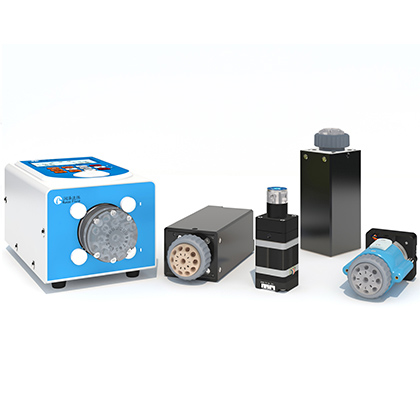
An SY-01B syringe pump should be evaluated with the complete liquid path, not with a pump nameplate value alone. Viscosity, syringe size, tubing material, tubing length, inlet restriction, operating speed, and stop behavior all influence whether a requested flow is stable and whether a small outlet leaves residual liquid. The current RUNZE sales-experience record and two laboratory reports provide a useful boundary: a 5 mL syringe and FEP path did not sustain the requested 60 mL/min at V6000 when handling cooking oil, while a lower V1000 setting produced a stable 5 mL cycle in 24 seconds. A separate 250 uL syringe, PEEK tubing, and deionized water test at V48 showed no observed vacuum in the syringe and no observed residual drip after stopping. These results are condition-specific, but they show how an OEM should structure an SY-01B application review.
Quick answer: Do not approve an SY-01B syringe pump for a viscous-liquid target by speed number alone. First record the liquid, viscosity if known, syringe volume, tubing material and dimensions, tubing length, inlet and outlet restrictions, and the required dispense profile. In the documented cooking-oil test, V6000 with a 5 mL syringe and FEP tubing showed bubbles or cavitation and did not reach a stable 60 mL/min; V1000 completed one 5 mL cycle in 24 seconds, equivalent to about 12.5 mL/min under that setup. In the separate low-speed water test, V48 with a 250 uL syringe and PEEK tubing showed no observed vacuum or residual drip. Use these as reference cases, not guarantees for a different assembly.
The cooking-oil report identifies an SY-01B M06 configuration with a 5 mL syringe. At V6000, the test observed bubbles or cavitation during liquid intake and pressure during discharge; the requested 60 mL/min was not achieved stably. At V1000, the system operated smoothly. One complete intake-and-discharge cycle took 24 seconds, and the recorded output was 5 mL per cycle, which calculates to approximately 12.5 mL/min (5 mL divided by 24 seconds multiplied by 60). The report does not provide the oil viscosity, tubing length, backpressure, repeated-run statistics, or a full speed-to-flow curve. Those values remain application data to collect.
The vacuum and outlet report uses a 250 uL syringe, V48, PEEK tubing, and deionized water. During intake, the report states that no vacuum was observed inside the syringe. During discharge, the outlet stopped when the pump stopped and no residual liquid was observed at the outlet. This is useful evidence for a low-speed, low-volume water setup. It does not establish the same behavior for cooking oil, a different syringe, a longer tube, a restrictive nozzle, or a higher stop speed.
A viscous liquid resists acceleration through a syringe and tubing. When the plunger moves quickly, the inlet side may not refill the syringe fast enough, and local pressure can fall enough to create bubbles or a cavitation-like condition. The resulting flow may become unstable even when the nominal speed command is high. The documented cooking-oil test is therefore better read as a system-limit observation: the tested syringe, tubing, liquid, and routing could not support a stable 60 mL/min at V6000. It is not evidence that every 5 mL syringe or every oil behaves the same way.
• Confirm the liquid identity and viscosity at the actual operating temperature.
• Record syringe nominal volume and the connection geometry at both ends.
• Measure tubing material, inner diameter, length, bends, filters, and outlet restrictions.
• Watch the intake stroke for bubbles, meniscus break-up, or incomplete refill before judging flow.
• Reduce speed in steps and document the highest setting that remains stable for the required cycle.
The 24-second cycle is a measured result for one test configuration, not a universal SY-01B flow rating. The simple calculation is useful because it makes the claim auditable: 5 mL / 24 s x 60 = 12.5 mL/min. However, the result could change if the liquid warms, if the syringe is partially filled, if the tubing is replaced, or if the system operates against backpressure. A customer requirement should therefore distinguish between theoretical commanded flow and stable delivered flow under a named setup.
Evidence point | Documented condition | Engineering interpretation |
Requested high flow | 5 mL syringe, FEP path, cooking oil, V6000 | Bubbles/cavitation observed; stable 60 mL/min not achieved |
Stable reference | 5 mL syringe, FEP path, cooking oil, V1000 | 24 s per 5 mL cycle, approximately 12.5 mL/min |
Low-speed outlet test | 250 uL syringe, PEEK path, deionized water, V48 | No observed syringe vacuum or residual outlet drip |
The water test answers two narrow questions: whether a vacuum was observed in the syringe during intake, and whether liquid continued to emerge after stopping in that low-speed setup. Those observations should not be merged into a general statement that the pump cannot create vacuum or can never drip. Drip behavior depends on outlet wetting, trapped liquid volume, nozzle geometry, tubing elasticity, fluid viscosity, stop position, and the timing of the final motion. A test that passes with deionized water can behave differently with a viscous or surface-active liquid.
• Define the observation window after the stop command and how a drip is measured.
• Use the production outlet, nozzle, and tube length; do not substitute an open beaker if the product uses a narrow tip.
• Record whether the pump stops immediately or uses a programmed deceleration profile.
• For small doses, measure mass or volume over repeated cycles rather than relying on visual inspection alone.
1. Write the requirement in measurable terms: target flow or dose, allowed variation, maximum cycle time, and acceptable residual liquid.
2. Record the fluid and temperature. If viscosity is unknown, obtain it or state that Data not available in source documents.
3. Build the exact fluid path, including syringe, fittings, tubing material and dimensions, nozzle, reservoir height, and backpressure.
4. Start at a conservative speed, confirm complete refill, then increase speed in controlled steps while watching for bubbles or cavitation.
5. Repeat each condition enough times to separate a one-off observation from a repeatable result. The available reports do not provide a production capability sample size.
6. Run a stop-and-hold test for the actual outlet and liquid. Record any delayed drip, siphoning, or meniscus movement.
7. Freeze the tested configuration in the acceptance record. A new syringe, tube lot, tube length, or nozzle is a new test condition.
The sales-experience record recommends collecting the liquid type, viscosity, target flow, single-cycle volume, syringe capacity, intake and discharge speeds, tubing material and dimensions, tubing length, and any backpressure or intake resistance. It also asks whether the customer's concern is bubbles during intake or drip after stopping. These questions prevent the common mistake of applying a water result to a viscous liquid or applying a high-speed theoretical flow to a restrictive fluid path.
Customer input | Why it changes the decision |
Liquid and viscosity | Determines refill resistance, bubble risk, and pressure response |
Syringe capacity | Changes plunger area, stroke volume, and achievable cycle time |
Tubing and nozzle | Adds restriction, dead volume, and wetting behavior |
Target dose/flow | Separates a short dispense from sustained transfer |
Stop criterion | Defines whether a small residual droplet is acceptable |
The available test did not achieve a stable 60 mL/min with a 5 mL syringe and FEP path at V6000; bubbles or cavitation were observed. The result is condition-specific, so a different syringe or fluid path requires a new test.
At V1000, one 5 mL cycle took 24 seconds, equivalent to approximately 12.5 mL/min for that setup. The source does not provide repeated-run statistics or a complete speed curve.
No vacuum was observed in the 250 uL syringe during the documented V48 deionized-water intake test. This does not cover other liquids, speeds, syringe sizes, or tubing paths.
No residual outlet liquid was observed in the documented V48 water test with PEEK tubing. Drip acceptance still needs to be checked with the production outlet and liquid.
The inlet path may not refill the syringe quickly enough during a fast stroke. Local pressure changes and incomplete refill can produce bubbles or cavitation-like behavior, as observed in the cooking-oil test.
No. Water and cooking oil can differ in viscosity, wetting, and bubble behavior. Use the customer's liquid or a justified surrogate under the final fluid-path conditions.
The source reports do not provide viscosity, tubing length and restriction, backpressure, repeated sample statistics, or a universal speed-to-flow curve. Data not available in source documents.
The SY-01B syringe pump can be evaluated responsibly when the claim is tied to a complete, recorded fluid path. The current evidence shows a clear contrast: a 5 mL cooking-oil setup was unstable at V6000 and did not sustain 60 mL/min, while V1000 produced a 24-second 5 mL cycle; a separate 250 uL deionized-water setup at V48 showed no observed vacuum or residual drip. These are useful engineering reference points, not universal guarantees. For an SY-01B syringe pump decision, reproduce the customer's liquid, syringe, tubing, outlet, speed profile, and stop criterion, then document the measured result and its limits.


 English
 日本語
日本語 한국어
한국어 français
 Deutsch
 Español
 italiano
 русский
 português
 Türkçe
 Nederland