
86-025-5119 7362

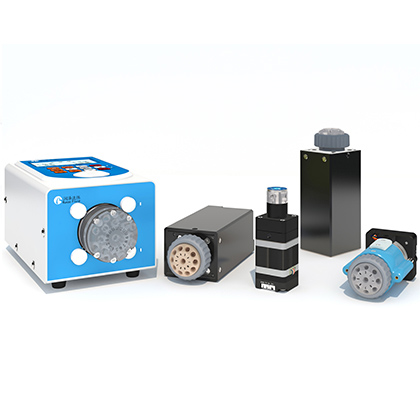
Selecting the right syringe pump for an automated liquid handling system requires evaluating flow accuracy, dispensing volume, fluid compatibility, control requirements, and integration flexibility. The ideal pump should match the application’s precision requirements, whether it is used for laboratory automation, diagnostic instruments, microfluidics, or industrial fluid control.
A reliable syringe pump solution is not selected only by flow range or motor specifications. Engineers need to consider the entire fluid handling process, including reagent characteristics, required repeatability, communication interfaces, valve configuration, and future scalability. Working with an experienced precision syringe pump manufacturer can help ensure that the pump system meets both technical and operational requirements.
The selection process should begin with understanding the application requirements rather than choosing a pump model based on specifications alone.
Key factors include:
For automated liquid handling systems, accuracy and repeatability directly affect test reliability and production consistency. A high-quality syringe pump should provide stable flow control even when dispensing very small liquid volumes.
Applications such as:
Diagnostic analyzers
Pharmaceutical testing equipment
Chemical analysis systems
Microfluidic platforms
often require precise and repeatable fluid movement.
Different applications require different dispensing capacities. A pump used for microliter-level reagent transfer requires different performance characteristics from a system handling larger industrial volumes.
Engineers should evaluate:
Minimum dispensing volume
Maximum syringe capacity
Flow rate range
Continuous versus intermittent operation
Choosing the correct specifications helps prevent unnecessary oversizing or insufficient performance.
The transported fluid affects material selection for syringes, valves, and tubing. Chemical solvents, biological reagents, and abrasive liquids may require different wetted materials.
Important considerations include:
Chemical resistance
Cleanliness requirements
Material compatibility
Risk of contamination
Understanding the main types of syringe pump configurations helps engineers select a suitable solution for automated systems.
Single syringe pumps are commonly used for applications requiring accurate fluid delivery with simple system structures.
Typical applications include:
Laboratory experiments
Calibration systems
Analytical instruments
They provide precise control with relatively simple integration.
Multi-channel syringe pumps allow multiple fluids to be controlled independently or simultaneously.
They are suitable for:
High-throughput testing
Automated sample preparation
Complex fluidic systems
Multi-channel designs improve workflow efficiency while maintaining precise dispensing performance.
Industrial syringe pumps are designed for applications requiring higher durability, longer operation cycles, and integration with automated equipment.
They are commonly used in:
Medical equipment
Industrial analyzers
Manufacturing systems
Automated fluid control platforms
Compared with laboratory models, industrial solutions usually require stronger mechanical structures and more flexible communication options.
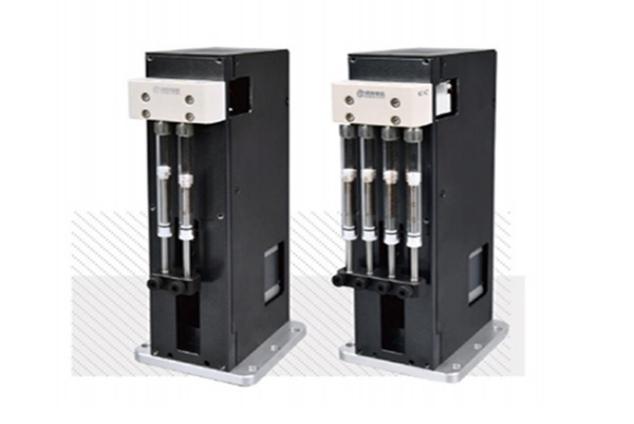
A syringe pump improves automated liquid handling accuracy by providing precise displacement control. Unlike some fluid delivery methods that rely heavily on pressure regulation, syringe pumps directly control liquid movement through accurate mechanical positioning.
In syringe automated liquid handling systems, accuracy is influenced by:
Stepper motor resolution
Syringe size selection
Mechanical transmission precision
Valve switching performance
Software control algorithms
This makes syringe pumps particularly valuable for applications where small volume differences can affect analytical results.
For example, in laboratory automation, accurate reagent dispensing helps reduce waste, improve experimental consistency, and increase overall system reliability.
The correct syringe size depends on the required dispensing volume and accuracy target.
A smaller syringe generally provides:
Higher dispensing resolution
Better control of small volumes
Improved precision for micro-volume applications
A larger syringe provides:
Higher total fluid capacity
Longer operation cycles
Reduced refill frequency
The best choice balances precision and operating efficiency. Selecting an oversized syringe may reduce resolution, while choosing a syringe that is too small may limit system productivity.
For automated equipment, integration capability is as important as mechanical performance.
A suitable syringe pump should support seamless communication with the host system through interfaces such as:
RS232 communication
USB control
TTL signals
Programmable control commands
OEM equipment manufacturers should also consider:
Software compatibility
Installation space
Custom control requirements
Future system upgrades
A flexible syringe pump design allows easier integration into automated platforms without major redesign.
OEM projects often require more than a standard pump model. A reliable precision syringe pump manufacturer can provide customization support based on equipment requirements.
Professional support may include:
Customized pump configurations
Valve and tubing selection
Mechanical integration assistance
Communication protocol adaptation
Application testing
For medical instruments, analytical equipment, and automated laboratory systems, customized pump solutions can improve reliability and shorten product development cycles.
Syringe pumps are widely used in systems requiring accurate and repeatable fluid movement.
Common applications include:
Automated diagnostic systems require precise reagent delivery to maintain test accuracy.
Research platforms use syringe pumps for:
Sample preparation
Liquid dispensing
Dilution processes
Chemical analysis
Microfluidic devices depend on stable and controllable fluid flow for experiments involving small sample volumes.
Industrial systems use syringe pumps when precise dosing and reliable operation are required over extended periods.
Different fluid handling technologies have different advantages depending on application requirements.
Compared with peristaltic pumps, syringe pumps typically provide:
Higher dispensing precision
Better low-volume control
More predictable flow characteristics
Compared with pressure-driven systems, syringe pumps offer:
Direct displacement control
Improved repeatability
Easier volume calibration
However, the best solution depends on factors such as fluid properties, required flow range, and system design.
Accuracy, repeatability, and compatibility with the application are the most important factors. The pump should match the required volume range, fluid type, and operating conditions.
The best type depends on the application. Single-channel pumps suit simple dispensing tasks, while multi-channel and industrial syringe pumps are better for complex automated systems.
Syringe pumps provide precise and repeatable fluid control, making them suitable for applications requiring accurate reagent dispensing and sample transfer.
Choose a manufacturer with proven precision technology, customization capability, application experience, and reliable technical support.
Yes. Many syringe pump manufacturers provide customized solutions including communication, mechanical integration, and fluid path configurations.
Choosing the right syringe pump for an automated liquid handling system requires a comprehensive evaluation of accuracy, flow requirements, syringe configuration, integration capability, and application environment.
From laboratory automation to industrial equipment, the right pump design ensures stable fluid control and consistent performance. Partnering with an experienced precision syringe pump manufacturer helps OEM developers and system integrators build reliable solutions that meet demanding fluid handling requirements.


 English
 日本語
 한국어
 français
 Deutsch
 Español
 italiano
 русский
 português
 Türkçe
 Nederland