
86-025-5119 7362

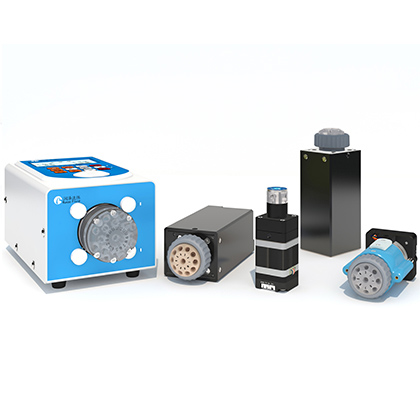
The precision of an industrial syringe pump is determined by a combination of mechanical accuracy, motor resolution, syringe design, fluid characteristics, control algorithms, and system integration quality. A truly reliable high precision syringe pump must maintain consistent flow rates, accurate positioning, and repeatable dispensing performance under different operating conditions.
For applications such as analytical instruments, medical diagnostics, laboratory automation, and microfluidic systems, precision is not achieved by a single component. It depends on how accurately the entire fluid delivery system controls displacement, pressure, and flow stability. Selecting a professional precision syringe pump manufacturer with expertise in fluid control technology is essential for achieving long-term system reliability.
The accuracy of an industrial syringe pump mainly depends on how precisely the system converts mechanical movement into controlled fluid displacement.
Unlike conventional transfer pumps, syringe pumps operate through precise linear movement of a plunger inside a syringe barrel. The volume delivered is directly related to the plunger displacement, meaning even small mechanical deviations can affect output accuracy.
The key factors influencing accuracy include:
Stepper motor or servo motor resolution
Lead screw precision
Syringe volume and dimensional tolerance
Piston sealing performance
Control system calibration
Fluid properties
Operating pressure conditions
A high-performance pump must maintain stable movement at both extremely low and higher flow rates. This is particularly important in applications where microliter-level dispensing accuracy directly affects analytical results.
Motor resolution is one of the most important factors influencing the positioning accuracy of an industrial syringe pump.
The motor controls the movement distance of the syringe plunger. A motor with higher resolution allows smaller incremental movements, enabling more precise fluid displacement.
Several motor-related factors affect performance:
Stepper motors divide rotation into small steps. A smaller step size allows finer control of plunger movement and improves flow adjustment capability.
Advanced control systems use microstepping technology to divide each motor step into smaller increments. This reduces vibration and improves smooth fluid delivery.
Consistent torque output prevents sudden movement changes that may introduce flow fluctuations, especially when handling high-viscosity fluids or operating against pressure resistance.
For demanding applications, a high precision syringe pump requires not only a high-resolution motor but also optimized mechanical transmission to fully utilize motor accuracy.
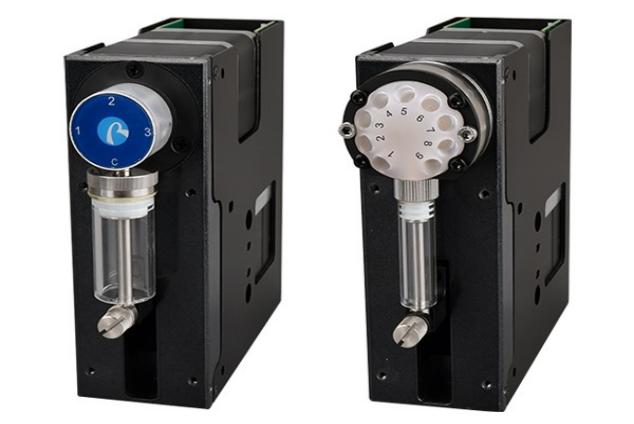
The lead screw mechanism converts motor rotation into linear plunger movement, making its manufacturing precision critical to pump performance.
A high-quality lead screw provides:
Accurate linear positioning
Low mechanical backlash
Stable movement over long operating cycles
Reduced volume error
Backlash between mechanical components can cause positioning delays, especially when the pump changes direction during aspiration and dispensing cycles.
For automated analytical equipment and laboratory systems, even small positioning errors can accumulate over repeated operations. Therefore, precision machining and assembly quality are essential factors when choosing an industrial syringe pump.
Syringe selection directly influences dispensing resolution and accuracy.
A smaller syringe provides finer volume control because each movement of the plunger corresponds to a smaller fluid displacement. However, larger syringes offer greater volume capacity and may be more suitable for applications requiring higher throughput.
The relationship between syringe size and accuracy depends on:
Required flow range
Minimum dispensing volume
Fluid viscosity
Application sensitivity
For example:
Medical diagnostic instruments may require small-volume syringes for accurate reagent handling.
Industrial automation systems may require larger syringes for continuous fluid delivery.
A suitable syringe configuration allows the pump system to achieve the required balance between precision and operational efficiency.
The mechanical interaction between the syringe barrel and piston significantly affects fluid delivery stability.
Poor sealing performance can result in:
Fluid leakage
Pressure loss
Inconsistent aspiration volume
Reduced repeatability
The syringe material also affects performance. Common considerations include:
Chemical compatibility with transported fluids
Surface smoothness
Wear resistance
Thermal stability
For applications involving sensitive reagents or aggressive chemicals, selecting appropriate syringe materials helps maintain consistent performance and prevents contamination.
A professional precision syringe pump manufacturer evaluates syringe compatibility as part of the complete fluid handling system rather than treating the syringe as an independent component.
Modern syringe pumps rely on intelligent control systems to improve repeatability and compensate for operating variations.
Advanced control functions may include:
Feedback systems monitor motor position and help maintain accurate plunger movement.
Calibration processes compensate for mechanical tolerances and ensure actual output matches programmed parameters.
Smooth movement profiles prevent pressure fluctuations during starting and stopping, improving dispensing consistency.
These technologies are especially valuable in automated systems where pumps must perform thousands of repeated cycles with minimal variation.
The characteristics of the transported fluid can significantly influence pump performance.
Important fluid factors include:
High-viscosity fluids require greater driving force and may increase pressure fluctuations during operation.
Compressible fluids such as gases respond differently from liquids and require additional control considerations.
Certain fluids may interact with syringe materials, seals, or tubing, affecting long-term reliability.
A properly selected industrial syringe pump must be matched with the specific fluid application to maintain stable and accurate delivery.
Pump precision does not depend only on the pump itself. The surrounding fluid system also affects overall performance.
Important integration factors include:
Tubing selection
Valve performance
Connection quality
Fluid path design
Pressure management
For example, flexible tubing with excessive expansion may introduce delays between pump movement and actual fluid output. Similarly, unsuitable valves may create additional dead volume or flow resistance.
A complete fluid control solution combines the syringe pump with compatible components to achieve reliable system accuracy.
Selecting the right pump requires evaluating application requirements rather than focusing only on advertised accuracy values.
Key selection criteria include:
Determine the minimum and maximum flow rates required by the application.
Consider the smallest dispensing volume that must be accurately controlled.
Evaluate chemical properties, viscosity, and temperature conditions.
Consider factors such as continuous operation, cleanliness requirements, and integration limitations.
OEM equipment manufacturers may require customized communication interfaces, mounting designs, or syringe configurations.
Working with an experienced precision syringe pump manufacturer helps ensure the selected pump matches both technical requirements and long-term production goals.
The accuracy of an industrial syringe pump depends on multiple factors, including mechanical components, syringe size, motor resolution, calibration methods, and operating conditions. High-quality systems can achieve highly repeatable dispensing performance when properly configured.
Syringe pumps provide precise control because fluid movement is directly related to the linear displacement of the syringe plunger. This allows accurate volume control at very low flow rates.
A high precision syringe pump typically uses more accurate mechanical components, improved motor control, better calibration systems, and optimized fluid path designs to achieve higher repeatability and lower dispensing variation.
Accuracy can be improved by selecting the correct syringe size, maintaining proper calibration, reducing tubing and valve-related errors, controlling fluid conditions, and using a pump designed for the specific application.
High precision syringe pumps are widely used in medical diagnostics, analytical instruments, biotechnology research, pharmaceutical equipment, microfluidics, and automated laboratory systems.
The precision of an industrial syringe pump is determined by the interaction of mechanical design, motor control, syringe performance, fluid characteristics, and system integration. A high-quality pump must deliver accurate positioning, stable flow control, and repeatable performance throughout long-term operation.
For manufacturers developing analytical instruments, medical devices, and automated fluid handling systems, choosing an experienced precision syringe pump manufacturer ensures access to reliable engineering support and application-specific solutions. A properly designed high precision syringe pump becomes a critical component for improving measurement accuracy, reducing process variation, and achieving consistent results in advanced fluid control applications.


 English
 日本語
 한국어
 français
 Deutsch
 Español
 italiano
 русский
 português
 Türkçe
 Nederland