
86-025-5119 7362

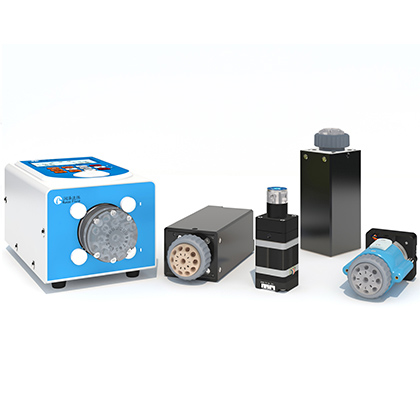
As laboratory experiments move from simple procedures toward more integrated and automated workflows, fluid control has become a critical factor influencing research accuracy and efficiency. A process that once required only one liquid source may now involve multiple reagents, synchronized injections, controlled mixing, and precisely timed fluid delivery. In these increasingly complex environments, the configuration of a syringe pump can directly affect experimental repeatability and system flexibility.
The decision between a single syringe pump and a multi syringe pump is not simply about choosing a device with more channels. It is about understanding how fluid delivery requirements change as experimental processes become more advanced. A single syringe pump provides reliable control for focused applications, while a multi channel syringe pump allows researchers to manage several fluid pathways within one coordinated system.
For applications involving microfluidics, biotechnology, pharmaceutical research, chemical analysis, and automated laboratory workflows, selecting the appropriate syringe pump configuration can help simplify operation while improving experimental consistency. Runze Fluid provides precision fluid control solutions designed to support different laboratory requirements and help researchers build more efficient fluid management systems.
A single syringe pump is designed to control one syringe through a precision motor-driven mechanism. By controlling the movement of the syringe plunger, the system can achieve accurate liquid dispensing or withdrawal at a controlled flow rate. This straightforward structure makes it suitable for applications where only one fluid pathway needs to be managed.
Single syringe pumps are commonly used in laboratory procedures such as sample injection, reagent delivery, calibration, and controlled liquid transfer. Because the system focuses on one fluid source, operation and integration are relatively simple, making it an effective choice for experiments with stable and predictable requirements.
A multi syringe pump expands the capability of traditional syringe-based fluid control by incorporating multiple syringe channels into one platform. Depending on the system design, each channel can operate independently or work together to achieve synchronized fluid delivery.
The primary difference between these two configurations lies in experimental flexibility. A single syringe pump is optimized for precision control of one liquid, while a multi channel syringe pump enables researchers to coordinate multiple fluids, create parallel experimental conditions, and manage more complex liquid handling processes.
| Comparison Factor | Single Syringe Pump | Multi Syringe Pump |
|---|---|---|
| Number of Fluid Pathways | Controls one syringe and one liquid channel | Controls multiple syringes and multiple fluid channels |
| Experimental Complexity | Suitable for simple and focused fluid delivery tasks | Designed for advanced workflows involving several fluids |
| Control Flexibility | Provides precise control over one flow process | Allows independent or synchronized control of multiple flows |
| System Integration | Simple setup and operation | Supports more complex experimental platforms |
| Typical Applications | Sample transfer, infusion, calibration, routine testing | Microfluidics, biotechnology, chemical research, pharmaceutical studies |
For researchers performing basic fluid delivery tasks, a single syringe pump may provide everything needed. However, when experiments involve multiple liquids, parallel testing, or controlled mixing, a multi syringe pump can provide greater operational advantages.
Many advanced experiments are no longer limited to a single fluid movement process. Researchers often need to introduce several liquids at specific ratios, maintain different flow conditions, or compare multiple experimental variables at the same time. These requirements make parallel fluid delivery an increasingly important capability.
A multi channel syringe pump allows multiple fluid streams to be controlled within the same experimental setup. Instead of operating several separate systems independently, researchers can coordinate different channels through one integrated solution.
In microfluidic applications, for example, multiple liquids may need to enter a small reaction environment under precisely controlled conditions. Even minor variations in flow behavior can influence experimental results, making accurate multi-channel control essential.
In pharmaceutical and biotechnology research, parallel fluid delivery can improve efficiency by allowing different reagents, samples, or solutions to be introduced according to predefined experimental protocols. This reduces manual adjustment and helps create more repeatable testing conditions.
The importance of parallel delivery is therefore not only related to increasing the number of channels. It provides researchers with better control over complex experimental processes and creates opportunities for more efficient laboratory workflows.
Precision is one of the most important factors when selecting a syringe pump configuration. Both single and multi-channel systems can achieve accurate fluid movement, but their advantages depend on the application requirements.
A single syringe pump offers a direct and simplified control structure. With only one syringe involved, researchers can focus on optimizing flow accuracy, volume control, and operating stability without managing additional variables.
A multi syringe pump provides expanded flexibility by allowing several syringes to operate together. This capability is valuable for experiments that require simultaneous infusion, multiple reagent delivery, or controlled fluid combination.
However, selecting a multi-channel system does not automatically guarantee better experimental performance. The correct configuration depends on the actual workflow. For a simple single-liquid application, additional channels may introduce unnecessary complexity. For advanced research involving multiple fluids, a multi channel syringe pump can significantly improve efficiency and experimental control.
Runze Fluid develops syringe pump solutions that focus on precise flow control, stable performance, and flexible application support. Researchers can evaluate different fluid handling options through the company’s product portfolio to identify a suitable configuration for their specific laboratory needs.
Choosing between a single syringe pump and a multi syringe pump requires more than comparing the number of available channels. Researchers should consider how the pump will be used throughout the entire experimental process.
The first factor is the number of liquids that need to be controlled. If only one solution is involved, a single syringe pump can provide accurate and efficient operation. When multiple reagents or samples must be delivered independently, a multi channel syringe pump offers greater flexibility.
The second consideration is workflow complexity. Using multiple independent pumps may require additional connections, controllers, and operational steps. A properly selected multi syringe pump can simplify system design by combining several fluid control functions into one coordinated platform.
Other factors include syringe compatibility, required flow range, automation requirements, communication options, and integration with existing laboratory equipment. A suitable syringe pump should support current experiments while leaving room for future application expansion.
The advantages of a multi syringe pump become especially valuable in research environments where several fluids must be precisely managed at the same time.
In microfluidics research, multiple liquids often need to be combined or introduced under carefully controlled conditions. A multi-channel configuration allows researchers to maintain stable flow relationships between different fluids and improve experimental consistency.
In pharmaceutical development, a multi syringe pump can support processes involving different compounds, reagents, and testing solutions. Researchers can create more efficient workflows by reducing repetitive manual operations.
Chemical research applications can also benefit from multi-channel fluid control. When experiments involve multiple reactants or controlled mixing procedures, a multi syringe pump provides the flexibility required for accurate liquid management.
These capabilities make multi channel syringe pump systems valuable tools for laboratories that require advanced control, automation, and repeatable fluid delivery performance.
An effective fluid management system should match the requirements of the experiment rather than simply provide the highest number of channels. The best syringe pump configuration is the one that balances precision, flexibility, operational simplicity, and future scalability.
A single syringe pump remains an excellent solution for applications requiring dedicated control of one liquid pathway. Meanwhile, a multi syringe pump provides broader capabilities when researchers need parallel operation, multiple reagents, or more advanced experimental coordination.
By selecting the right configuration, laboratories can improve workflow efficiency, reduce system complexity, and achieve more consistent experimental results.
Runze Fluid supports laboratory fluid management requirements with precision syringe pump solutions designed for different research environments. Researchers looking for application-specific guidance can connect with the Runze Fluid team through the company’s contact page to discuss suitable configurations and technical requirements.
The choice between a single syringe pump and a multi syringe pump depends on the complexity of the experiment, the number of required fluid pathways, and the desired level of control. Single syringe pumps provide dependable performance for focused applications, while multi-channel systems offer greater flexibility for advanced laboratory workflows.
As research processes continue to evolve, precise multi-fluid management is becoming increasingly important. Selecting the appropriate syringe pump configuration allows researchers to improve efficiency, enhance experimental reliability, and build more adaptable fluid handling systems.
A single syringe pump controls one syringe and one fluid pathway, while a multi syringe pump controls multiple syringes for parallel or independent fluid delivery.
A multi channel syringe pump is suitable when experiments require multiple liquids, synchronized delivery, controlled mixing, or parallel testing.
Both systems can provide high precision. The main advantage of a multi syringe pump is increased flexibility and multi-fluid control capability.
In many applications, a multi syringe pump can simplify system design by combining multiple fluid channels into one integrated platform.
Common applications include microfluidics, biotechnology research, pharmaceutical development, chemical analysis, and laboratory automation.
The selection should be based on fluid quantity, experimental complexity, required accuracy, automation needs, and future expansion requirements.


 English
 日本語
日本語 한국어
한국어 français
 Deutsch
 Español
 italiano
 русский
 português
 Türkçe
 Nederland