
86-025-5119 7362

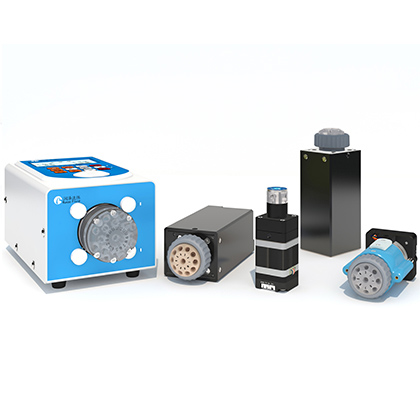
SY01B syringe pump power loss recovery requires a decision about both position and retained liquid before the next motion command is issued. An interrupted instrument may contain a valuable sample while the pump requires initialization. A RUNZE sales experience record describes simulated initialization for the SY01B and SY01BM under specific conditions, using the lowercase ASCII command z. This guide explains those conditions and shows how equipment developers can structure a recovery review without treating a short command example as a complete operating procedure.
The key distinction is between reestablishing control through a documented simulated reset and carrying out mechanical initialization. The sales record states that these operations behave differently. It also requires confirmation of the model, active protocol, and unchanged mechanical position. If any of those conditions cannot be established, the next step is technical review of the actual unit and fluid path. An automatic restart based only on the fact that power has returned is not supported by this evidence.
For the SY01B or SY01BM case described in the sales record, lowercase z is an ASCII simulated initialization command that does not perform mechanical initialization. Uppercase Z is associated with mechanical initialization and can discharge the syringe contents during the described reset. Before considering z, confirm that the prior position is known and that neither the piston nor valve was moved after the interruption. Confirm the complete command format in the manual for the unit. Do not send ASCII syntax to a unit operating under another protocol.
The recovery decision should be made before the host sends its normal startup sequence. Collect the full product code, active protocol, action at the moment of failure, last reliable position information, and an estimate of the liquid remaining. Establish whether anyone moved the piston or valve while power was absent. The sales case specifically calls for those checks because restoring software control does not independently prove that a stored position still describes the mechanism.
Decision point | Option or evidence | What to verify |
Simulated initialization | Lowercase z in the cited ASCII case | Known previous position, unchanged mechanism, exact manual |
Mechanical initialization | Uppercase Z in the cited case | Expected movement and destination of discharged liquid |
Unknown position | Recovery prerequisites not established | Technical review before ordinary motion resumes |
External pause resume | H1 and H2 in the local application note | Valid programmed pause; not evidence of post-power-loss referencing |
Different protocol | ASCII example does not transfer | Supported procedure for the actual model and protocol |
The matrix is a triage guide, not executable software. The sales record contains abbreviated examples and references product manuals, but the attachments named in that record were not available in the inspected source set. Exact framing, terminators, execution behavior, supported firmware revisions, and any position argument requirements must therefore come from the applicable manual. Data not available in source documents. A blog cannot fill those gaps by constructing a command string that appears plausible.
The sales record describes lowercase z as simulated piston initialization without a mechanical initialization movement. Its stated purpose is to regain control after power loss while retaining liquid for a later, deliberate transfer. The same record describes uppercase Z as mechanical initialization, moving the piston toward its reference and discharging contents in the case discussed. Treat letter case as part of the command identity. Replacing one letter with the other changes the intended operation.
Preserving liquid during initialization is not the same as proving its quantity, quality, or position in the fluid path. The source does not establish that every interrupted action can be resumed from its previous program step. It also does not establish that a software initialization verifies the physical reference. For recovery repeatability, delivered-volume error after interruption, and the effect of an interruption during motion: Data not available in source documents. These need model-specific documentation and an application test.
In the host interface, describe the intended effect in plain language alongside the approved command. For example, an operator should understand whether the selected function is expected to move the piston. Log the chosen operation and the conditions that allowed it. This is a recommended implementation practice for a recovery workflow, not a description of a built-in RUNZE user interface or an assertion that all controllers expose the same functions.
Identify whether the pump was aspirating, dispensing, switching the valve, waiting, or already stopped when the equipment lost power. Preserve the host log and any received status information. Record which facts are confirmed and which are inferred. The last transmitted command is evidence of what the host requested; by itself, it is not evidence of how much of that command completed. Avoid converting a missing response into an assumed completed dispense.
Check the physical installation without changing the state that the investigation needs to establish. Ask whether service personnel moved the piston or turned the valve, and compare the reported condition with the recorded operating state. The sales case excludes reliance on simulated reset when mechanical positions have been changed or cannot be confirmed. If the evidence is incomplete, keep routine motion commands inhibited and seek a documented recovery method for that particular condition.
Define the immediate objective. It may be to retain the liquid, transfer it to a designated container, or prepare the pump for a fresh operating cycle. These are different outcomes. In the sales case, simulated initialization is followed by selecting an appropriate valve route for liquid discharge or transfer. That description does not authorize an arbitrary route, dose, or speed. The actual destination and sequence must be checked against the installed valve and the retained material.
Prepare a route map before recovery testing. Identify the syringe connection, intended collection destination, waste connection, and any route that must remain isolated. Confirm the valve position using the method supported by the unit. Record how the controller prevents a normal startup sequence from overriding the recovery decision. A sample transferred out of the syringe may still require separate assessment before it can be used in an analytical process; this article does not establish sample validity after an interruption.
After liquid handling is complete, use the approved procedure to return the instrument to a known operating state. Do not leave a recovery exception active in routine production logic merely because the immediate transfer succeeded. The source case supports a conditional recovery function, not indefinite operation with uncertain position. Define the point at which normal initialization and acceptance checks are required before the next unattended sequence.
The local application note 8001000006 describes another SY-01B control function: resuming commands after H1 and H2 pause points using external 5 V signals. Its example uses designated auxiliary input connections and a prewritten aspiration and dispense sequence. The note concludes that external triggering can resume those two pause conditions. That is evidence for controlled continuation within the documented sequence, not evidence that an external trigger establishes position after loss of power.
The distinction matters when an instrument has a start button, relay, or external automation signal. A pause-resume input should not silently substitute for the initialization review after restart. Evaluate whether startup software, a maintained signal, or an operator action could unintentionally begin a sequence before the recovery state is resolved. This is a proposed machine-level check. The application note does not specify every controller's startup behavior, so it cannot establish that such a restart will or will not occur.
The recovery sales record limits lowercase z guidance to the ASCII protocol and identifies SY01B and SY01BM as the relevant products. It explicitly warns against using that instruction blindly with another model or with MODBUS or RUNZE protocol operation. The broader RUNZE catalog also shows that protocol and hardware configuration are specification items. That supports checking the exact configuration; it does not provide a translation of the recovery command between protocols.
A separate sales record describes a similar customer question for SY-11 and mentions additional command examples. It should not be used to fill gaps in an SY01B procedure. Commands that resemble one another can still belong to different model or protocol documentation. Keep the model name, firmware, protocol manual revision, and approved command sequence together in the equipment's service instructions. For a supported non-ASCII recovery sequence on the specific SY01B unit: Data not available in source documents.
Develop an acceptance test with a suitable representative liquid and an agreed instrument setup. Include interruptions during the states that matter to the intended process. Record the command history, status evidence, observed position, valve state, retained amount, recovery choice, and final collected result. The purpose is to check the complete recovery workflow. Do not present these recommended trials as tests already performed by RUNZE or as evidence of a published recovery accuracy specification.
Include cases in which the prerequisites are deliberately unavailable, such as an uncertain position record or a reported manual intervention. The expected result should be a controlled stop for the agreed review, rather than automatic progression through the normal sequence. Also test the transition back to regular operation after the recovery activity ends. Establish who can authorize that transition and which observations demonstrate that the instrument is ready for another cycle.
Retain the approved procedure with the firmware and hardware configuration it was tested against. Revisit it when the syringe, valve, control program, or protocol configuration changes. For a support request, provide the complete model code, the sequence running at power loss, logs or screenshots, the remaining liquid estimate, and a clear statement about manual movement. Those details follow the diagnostic questions in the sales case and help narrow the technical review.
The SY01B sales record describes it as simulated initialization without the mechanical initialization movement. It must not be treated as proof that the physical reference was independently verified. Confirm the exact behavior in the manual for the installed unit.
The described mechanical initialization can discharge the contents. Do not select it on the assumption that it preserves the sample. Decide how the liquid will be handled before choosing the approved initialization procedure and route for the installation.
The sales record says the lowercase z instruction discussed there applies to ASCII operation. It does not establish a MODBUS equivalent for the installed unit. Obtain the appropriate model and protocol documentation instead of sending ASCII text through an incompatible interface.
The case's prerequisites are no longer established. Do not rely on the previous recorded position to justify simulated initialization. Keep routine motion inhibited and ask technical support for the appropriate procedure using the actual position and fluid path information.
The application note supports resuming a programmed pause using external signals. It does not establish power loss recovery or position referencing. Treat external pause continuation and post-interruption initialization as separate functions in the instrument's control design.
No recovery-volume validation is provided in the reviewed records. Data not available in source documents. Define how the remaining and transferred quantities will be assessed, and determine separately whether the recovered liquid remains acceptable for the intended process.
SY01B syringe pump power loss recovery should begin with verified model, protocol, mechanical state, and liquid routing. The documented distinction between lowercase z and uppercase Z is useful, but it is conditional and does not replace the exact product manual. Separate retained-liquid handling from normal restart, keep external pause-resume controls distinct from initialization, and validate the approved recovery sequence before it is needed in an instrument.


 English
 日本語
 한국어
 français
 Deutsch
 Español
 italiano
 русский
 português
 Türkçe
 Nederland