
86-025-5119 7362

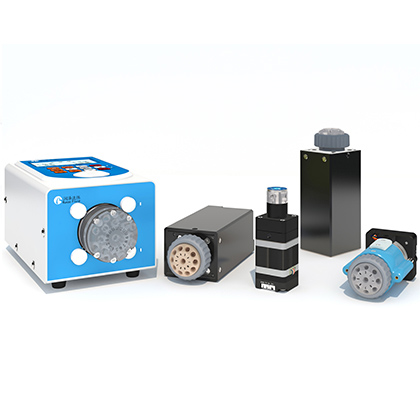
SY11 syringe pump selection starts with the liquid handling task and the evidence needed to approve a specific configuration. Equipment builders evaluating a compact pump and valve assembly need more than an application list. They need to connect dose requirements, routing, installation space, control behavior, and service access to a documented model. This guide explains how to prepare that evaluation using RUNZE sales application records and the broader pump selection catalog, while keeping model-specific claims separate from engineering recommendations.
The SY11 sales records describe an integrated syringe pump with different distribution valve and syringe options. Their installation and maintenance questions provide a starting point for evaluation, but do not establish configuration-specific accuracy, compatibility, or service intervals.
Shortlist SY11 when an integrated syringe and distribution valve arrangement fits the instrument layout, then request the exact configuration drawing, syringe and valve options, wetted material list, and control documentation. Define the minimum and maximum dose, permitted error, refill sequence, liquid properties, pressure conditions, and available installation space before choosing a model. Approve the pump only after testing the actual fluid path and confirming service access. Do not transfer numerical specifications from an SY-01B or SY-03B catalog page to SY11 simply because all are syringe pumps.
The sales application records support investigating compact installation, modular maintenance, and configurable liquid routing. Resolve those questions with drawings and model documentation. The matrix identifies the evidence needed before a configuration enters the purchase specification.
Decision point | Option or evidence | What to verify |
Compact installation | Sales records identify space and maintenance concerns | Exact envelope, mounting drawing, and component removal space |
Syringe and valve | Configurable options described in sales records | Available combinations and routing for the ordered code |
Performance | Application-specific numerical evidence incomplete | Defined accuracy metric and relevant test conditions |
Control | Several protocol options discussed | Delivered interface, active protocol, and firmware manual |
Service life | Sales statements lack full test conditions | Applicable test report and maintenance acceptance criteria |
The available catalog illustrates how RUNZE documents other syringe pump families, including the Smart SY-01B and SY-03B. Their pages separate stroke, syringe options, valve arrangements, interfaces, and test conditions. That structure is useful when requesting an equivalent SY11 specification sheet. It is not evidence that SY11 has the same stroke, dimensions, electrical interface, or performance. A shared product category cannot replace an identified model and revision.
Write down the smallest dispense, normal dispense, largest dispense, number of repeats, and maximum permitted cycle time. Describe whether the result is a single collected dose, a sequence of additions, or delivery over a measured interval. Also state where the delivered volume is measured. A result collected at the pump outlet does not automatically describe the result at the end of the installed tubing and nozzle. These definitions make supplier discussions and prototype tests comparable.
Separate acceptance of the mean delivered amount from acceptance of variation between repeated doses. Ask how the stated error is defined and whether it refers to syringe capacity, stroke, commanded volume, or collected volume. The catalog pages reviewed for other RUNZE models explicitly attach certain accuracy figures to rated stroke and identify pure water at normal temperature and pressure as their test medium and conditions. Those qualifications are part of the specification, not optional footnotes.
For SY11 accuracy across different liquids, partial strokes, pressures, and flow settings: Data not available in source documents. Request a test report that names the configuration and method. If a required operating point is absent, make it part of the prototype acceptance plan. A sales comparison with another brand is not a substitute for results obtained under the same conditions, with the same measurement definition and an identified sample of hardware.
Create a fluid path drawing showing sample, reagent, wash, waste, calibration liquid, and each destination. Identify which routes are required during normal operation, startup, maintenance, and an interrupted cycle. Then ask the supplier to map those routes to the proposed valve head. Confirm the common port and the meaning of each selected position. A statement that a pump is available with multiple valve options does not specify the routing behavior of any one option.
Record the syringe configuration alongside that valve selection. Ask for the permitted syringe capacities, attachment dimensions, replacement procedure, and any restrictions on installation orientation. Plan how an operator will identify the correct spare part without relying on appearance alone. In a serviceable instrument, the model code, drawing, spare part description, and software configuration should agree. This is particularly relevant when a project evaluates more than one syringe or valve combination during development.
The sources do not provide a verified SY11 common-port volume or a complete route-by-route carryover study. Data not available in source documents. If residual liquid matters to the analysis, define an acceptance test with the intended wash sequence and assay-relevant measurement. Describe any reduction in tubing or service time only after comparing the actual layouts. The sales material's broad convenience claims should not become numerical savings in the equipment specification.
Prepare a list of all process liquids and cleaning agents, including their concentrations, temperatures, contact times, and intended use sequence. Ask for the wetted materials of the exact valve and syringe assembly. Extend that request to the fittings and tubing selected for the machine. The records identify liquid type and corrosive conditions as questions to settle before recommending a model. They do not provide a universal compatibility table for SY11.
Avoid approving the assembly from a familiar material name alone. The useful deliverable is a configuration-specific compatibility assessment and, where needed, an agreed exposure test. Keep the evidence attached to the material and part revision it covers. For maximum permitted viscosity, solvent-specific service life, and validated cleaning conditions for the proposed SY11 assembly: Data not available in source documents. These are supplier confirmation items, not opportunities to estimate a reassuring value.
The SY11 sales records repeatedly identify limited space and maintenance access as reasons to evaluate the product. Translate those concerns into a dimensional review. Request the assembly drawing, mounting details, connector access requirements, and removal space for the syringe and valve. Include the installed fittings and tube routes in the review. A compact component can still be difficult to replace if the surrounding instrument blocks the service path.
Discuss the operating environment at the same time. One sales record raises exposure of an unenclosed drive board as a customer concern. Obtain the supplied enclosure configuration and the relevant environmental specification for the exact unit. Do not assume a protection rating or resistance to cleaning spray. Agree how leaks will be detected and how service personnel will reach the fluid connections. These are proposed instrument design checks, not claims about an existing SY11 protection system.
Ask for replacement part identification and a service procedure before fixing the final layout. Sales records mention syringe and valve life, but the available evidence does not establish a test method and an application-specific replacement interval. Keep those life statements out of the release specification until supporting reports are available. A useful maintenance plan states what to inspect, what constitutes a failed check, and which approved part restores the validated configuration.
Record the requested physical interface and command protocol as separate fields in the purchase specification. The SY11 records discuss multiple protocols and integration requirements, but descriptions across the records are not sufficient to define every delivered electrical option. Ask for the protocol manual, connector pinout, firmware identification, addressing method, and command examples that apply to the ordered model. Do not infer interface availability from the name of another pump in the catalog.
During evaluation, demonstrate initialization, aspiration, routing, dispensing, stopping, and recovery from an interrupted operation. Specify how the host knows that a command completed and how it handles an uncertain response. Include a restart review so that software does not assume the previous fluid or position state has survived a power interruption. These checks help turn a successful bench demonstration into an explicit equipment behavior specification without claiming that a particular recovery function is supported.
Use a test record that identifies the pump code, firmware, syringe, valve, tubing, liquid, temperature, source and destination conditions, and measurement method. Test the intended range of doses and the actual sequence of refill and dispense operations. Keep individual results as well as averages. If the application includes a wash cycle, test that cycle in the same configuration rather than validating pumping and cleaning as unrelated functions.
Define pass criteria before collecting results. Then record deviations, configuration changes, and retests so the approved setup can be reproduced. The final package should connect the purchase specification to the drawing, control program, service parts, and acceptance evidence. For an OEM enquiry, send this requirement set to RUNZE with the fluid path drawing. That gives the supplier specific questions to answer and makes the next sample evaluation more useful than a general request for a high precision pump.
No interchangeability is established by the reviewed sources. Compare mounting, syringe, valve routing, interface, protocol, and behavior for the exact configurations. Use the catalog pages for those other families as a checklist of specification categories, not as SY11 data.
Use an identified SY11 specification and its stated measurement conditions, followed by application validation. The reviewed material does not provide a complete numerical accuracy map suitable for every proposed configuration. Data not available in source documents.
The sales descriptions of multiple distribution options do not demonstrate simultaneous delivery from multiple outlets. Ask for the valve routing diagram and operating sequence. Write any simultaneous dispensing requirement explicitly into the enquiry and require supporting configuration evidence.
The records do not support that claim. Provide the process and cleaning liquid details, obtain a complete wetted material list, and agree on compatibility evidence for the actual assembly. Keep unsupported chemical resistance statements out of the published specification.
Request the test conditions behind any life figure and compare them with the intended duty. Determine inspection and replacement criteria through the agreed application evaluation. A sales life statement without its method does not define the maintenance interval for an instrument.
Send the fluid path drawing, dose range, permitted error, cycle timing, pressure conditions, liquid list, interface requirements, and installation envelope. Include the proposed acceptance method so the supplied sample can be evaluated against a clear and reproducible requirement.
SY11 syringe pump selection is most effective when it produces an identified configuration and a testable acceptance package. The sales records justify evaluating integrated routing, compact installation, and service access; they do not justify transferring another model's specifications or promising application performance. Resolve syringe and valve details, liquid compatibility, controls, and maintenance with the appropriate documentation, then validate the complete instrument fluid path before release.


 English
 日本語
 한국어
 français
 Deutsch
 Español
 italiano
 русский
 português
 Türkçe
 Nederland