
86-025-5119 7362
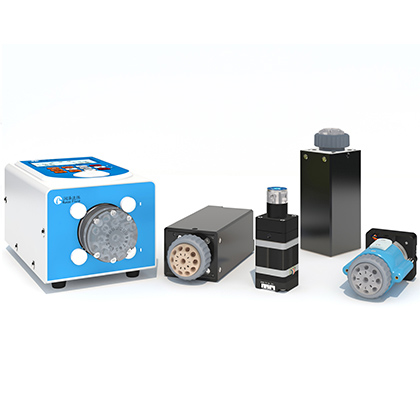
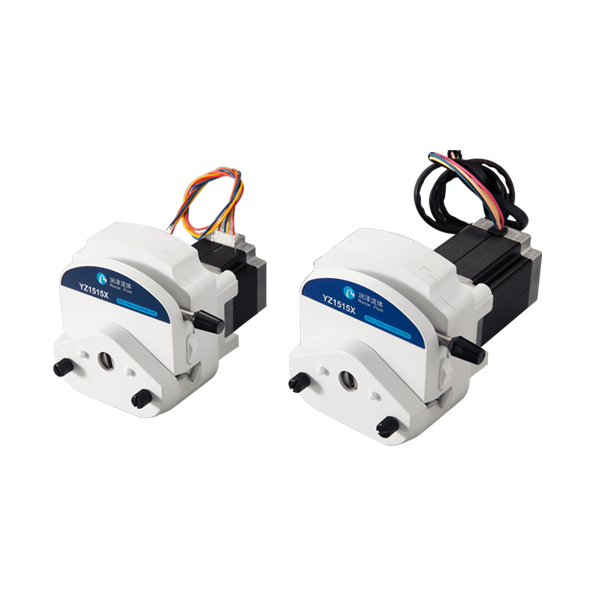
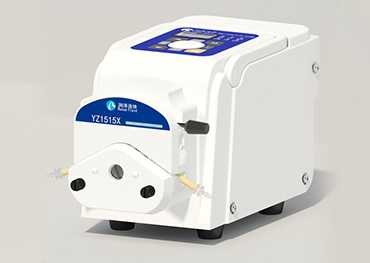
Selecting the right peristaltic pump tubing size is essential for achieving the target flow rate. In many projects, customers need to know which tubing inner diameter to use or what motor speed is required when the pump head and tubing are already defined.
This article explains a practical method for peristaltic pump flow rate calculation and tubing selection based on experimental constants for common pump head types.
In a peristaltic pump, tubing inner diameter directly affects the volume of liquid delivered per rotation. A larger inner diameter generally produces a higher flow rate, while a smaller inner diameter helps support lower flow ranges and finer dosing control.
For fast selection, flow rate can be estimated from tubing radius and motor speed.
For common peristaltic pump configurations, the flow rate `Q` is approximately proportional to the square of the tubing inner radius `r^2` and the rotational speed `N`.
The empirical formula is:
`Q = k x r^2 x N`
Where:
`Q` = flow rate, in `mL/s`
`r` = tubing inner radius, in `cm`
`N` = rotational speed, in `rpm`
`k` = empirical constant for the specific pump head and rotor structure
This formula is suitable for preliminary engineering selection within the normal operating range of each pump head.
| Pump head type | k value |
| SN-3 rotor | 0.586 |
| YZ1515-3 rotor | 0.592 |
| YZ1515-6 rotor | 0.434 |
| YZ2515-3 rotor | 0.536 |
| RZ1030(B)-4 rotor | 0.385 |
| RZ01-4 rotor | 0.327 |
| RZ02-3 rotor | 0.427 |
| RZ02-6 rotor | 0.309 |
If the pump head model and tubing inner diameter are known, the required speed can be calculated as:
`N = Q / (k x r^2)`
Example: Calculate Speed for a Target Flow Rate
Assume:
- pump head = `RZ1030(B)-4`
- tubing inner diameter = `1.42 mm`
- target flow rate = `35 mL/min`
Step 1: Convert the flow rate
`35 mL/min = 0.5833 mL/s`
Step 2: Convert the tubing size
- inner diameter = `1.42 mm = 0.142 cm`
- radius = `0.071 cm`
- `r^2 = 0.005041`
Step 3: Use the matching `k` value
`k = 0.385`
Step 4: Calculate speed
`N = 0.5833 / (0.385 x 0.005041) = about 300 rpm`
Recommended selection:
- operating speed `about 300 rpm`
If the pump head and operating speed are known, the tubing radius can be estimated by:
`r = sqrt(Q / (k x N))`
Then:
`inner diameter = 2r`
Example: Calculate Tubing Size for a Target Flow Rate
Assume:
- pump head = `YZ1515-3`
- speed = `400 rpm`
- target flow rate = `360 mL/min`
Step 1: Convert the flow rate
`360 mL/min = 6 mL/s`
Step 2: Use the matching `k` value
`k = 0.592`
Step 3: Calculate radius
`r = sqrt(6 / (0.592 x 400)) = 0.159 cm`
Step 4: Convert to inner diameter
`2 x 0.159 = 0.318 cm = 3.18 mm`
Recommended selection:
- use tubing with inner diameter close to `3.2 mm`
- `16# tubing` is a suitable option
Although the formula is useful for quick estimation, actual flow rate may still vary because of:
- tubing wall thickness
- tubing material elasticity
- roller compression
- liquid viscosity
- suction height
- discharge back pressure
- tubing wear over time
When Should You Test the System?
Formula-based selection is a strong starting point, but real-liquid testing is recommended when the application involves:
- viscous liquids
- long transfer distance
- continuous-duty operation
- precision dosing
- strict repeatability requirements
When a customer asks for tubing selection based only on flow rate, collect these details before confirming the final recommendation:
- liquid type
- viscosity
- target flow range
- operating speed range
- transfer distance
- height difference
- required accuracy
This improves selection accuracy and helps avoid oversizing or undersizing the pump system.
Peristaltic pump tubing size and motor speed can be estimated efficiently using the formula:
`Q = k x r^2 x N`
With the correct `k` value:
- use tubing size to calculate required speed
- use speed to estimate suitable tubing inner diameter
- validate the result with real application conditions
This method can make customer communication faster and improve the quality of pump selection recommendations.
Need help choosing the right tubing size, pump head, or speed for your application? Contact Runze Fluid for engineering support, model selection, and flow rate matching advice.


 English
 日本語
日本語 한국어
한국어 français
 Deutsch
 Español
 italiano
 русский
 português
 Türkçe
 Nederland