
86-025-5119 7362
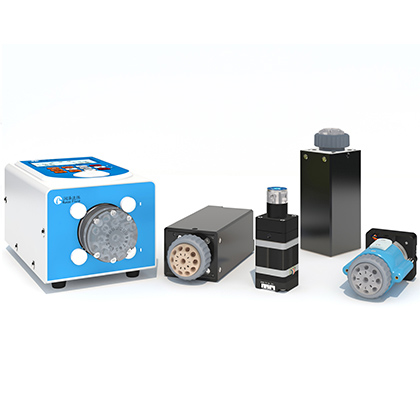
In 24/7 diagnostic instruments, analytical platforms, automated liquid handling systems, and industrial dispensing lines, an OEM syringe pump is not simply a dosing component — it is a precision fluid control module whose valve material, seal design, wetted path chemistry, motion architecture, and communication interface collectively determine the uptime, accuracy, repeatability, and total cost of ownership of the entire instrument or automation line it serves. For procurement managers and engineers evaluating a syringe pump OEM manufacturer, the commercially relevant question is not "What is the flow rate?" — it is "Will the pump head, valve material, seal design, and communication interface survive my chemical media, operating pressure, and automation cycle count across a three-to-five year instrument service life without creating unplanned downtime?"
The answer to that question depends on engineering decisions that are invisible in a catalog specification sheet but critical in field performance: whether the wetted path materials are genuinely compatible with the chemical media at the operating concentration and temperature, whether the seal design maintains leak-free performance through millions of aspiration and dispensing cycles, whether the valve geometry minimizes dead volume and cross-contamination risk, and whether the communication protocol — CAN bus control, RS485 communication, or RS232 — integrates cleanly with the instrument's control architecture and supports Python or LabVIEW integration without requiring custom protocol development. Runze's OEM syringe pump supports 50 mL and 100 mL configurations, high accuracy, programmable control, RS232, RS485, and CAN communication, and a stated service life of 3 million cycles without leakage under water-media testing — providing the specification depth and customization capability that demanding OEM integration requires.
This guide covers the complete picture for instrument engineers, system integrators, and procurement managers: why material failure creates high total cost of ownership in automated fluid systems, what an OEM syringe pump is and how it functions as a fluidic subsystem, how valve material and seal technology determine pump lifespan, how to evaluate pump components for chemical compatibility and cycle life, and what maintenance practices protect pump performance through the instrument's service life.
The commercial case for investing in properly specified OEM syringe pump materials starts with a clear understanding of the specific failure mechanisms that chemical incompatibility, inadequate seal design, and poor valve geometry create in automated fluid systems — and why each failure mechanism has total cost of ownership consequences that far exceed the cost difference between a properly specified and an inadequately specified pump.
Seal swelling from chemical exposure is the failure mode that most commonly initiates the downtime cascade in automated analytical instruments. When a seal material is not genuinely compatible with the chemical media at the operating concentration and temperature — even if it passes a brief compatibility check at room temperature — the seal absorbs the chemical, swells, increases friction against the piston, and eventually either creates leakage as the seal geometry distorts or causes motor overload as the increased friction exceeds the motor's torque capacity. In a 24/7 analytical instrument, this failure typically occurs gradually — manifesting first as dispensing drift that affects measurement accuracy, then as intermittent leakage that contaminates the instrument interior, and finally as complete pump failure that stops the instrument and requires field service intervention.
Valve leakage under pressure cycling is the failure mode that most directly affects dispensing accuracy and cross-contamination risk. A valve with inadequate seat precision, incompatible seat material, or insufficient sealing force will develop leakage paths as the valve seat wears through repeated pressure cycling — creating backflow that reduces dispensing accuracy, dead volume that creates carry-over between samples, and pressure loss that affects the pump's ability to aspirate against the system back-pressure. In diagnostic instruments where sample integrity is a regulatory requirement, valve leakage is not simply a performance problem — it is a quality system failure that may require instrument recall and revalidation.
The total cost of ownership calculation that material selection determines is the commercial framework that procurement managers should use to evaluate OEM syringe pump specifications:
Total Cost of Ownership = Pump Price + Integration Cost + Downtime Cost + Maintenance Cost + Replacement Cost + Field Service Risk
A pump with a 30% higher unit price but a 3 million-cycle service life, genuine chemical compatibility with the operating media, and clean communication protocol integration may deliver a total cost of ownership that is 50% lower than a cheaper pump that requires seal replacement every 500,000 cycles, creates dispensing drift that requires frequent recalibration, and requires custom protocol development for integration.
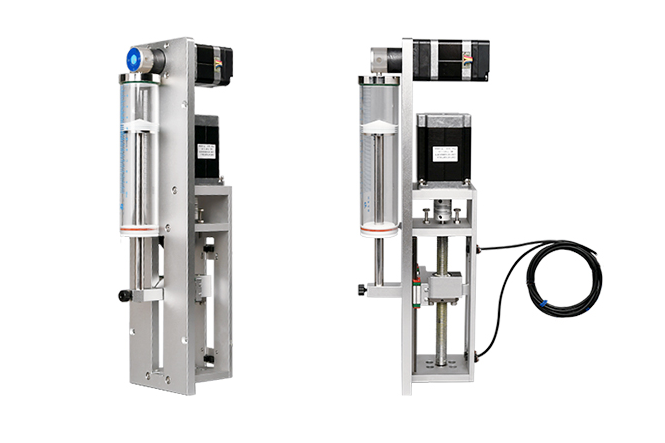
Understanding what an OEM syringe pump is — and how its component architecture, material specification, and communication interface work together as a fluidic subsystem rather than a standalone pump — is essential for engineers and procurement teams evaluating pump specifications for instrument integration.
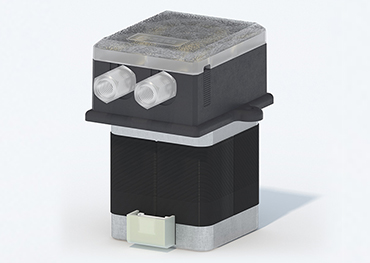
An OEM syringe pump is a compact precision dispensing module designed to be integrated into medical, laboratory, industrial, environmental, or analytical instruments. It combines a motor actuator, syringe barrel, piston, valve, fittings, sensors, controller board, and communication interface into a single module that can be specified, customized, and integrated as a complete fluidic subsystem. Runze describes its OEM syringe pump as commonly customized with 50 mL or 100 mL capacity for higher-volume liquid handling in OEM systems, with high accuracy and repeatability for constant-volume dispensing applications.
| Specification | Runze OEM Syringe Pump |
|---|---|
| Volume | 50 mL, 100 mL |
| Accuracy | ≤1% at 100% stroke |
| Repeat accuracy | 0.3% to 0.7% at 100% stroke |
| Pressure | 0 to 1.0 MPa air, 0 to 1.2 MPa water |
| Service life | 3 million cycles without leakage under water-media testing |
| Actuator | Ball screw, 2 mm lead |
| Fluid path | Borosilicate cylinder, PTFE piston, PTFE outlet |
| Connection | 1/4-28UNF |
| Communication | RS232, RS485, CAN |
| Power supply | DC24V, 1.5A |
| Working temperature | 5 to 55°C |
A good OEM syringe pump should be evaluated as a fluidic subsystem — not a standalone pump. Engineers must review materials, seals, valves, pressure capability, communication protocol, and maintenance cycle together as an integrated performance specification.
The technical mechanism by which valve material selection, seal design, and wetted path chemistry determine the lifespan, accuracy, and maintenance interval of an OEM syringe pump in 24/7 automated fluid systems — and why these material decisions are more important than motor specification or flow rate for long-term reliability — is the core engineering knowledge that instrument designers and procurement managers need to evaluate pump specifications for demanding applications.
Different chemical media attack materials through different mechanisms — corrosion, swelling, extraction, crystallization, and abrasion — and the valve material must resist all of these mechanisms at the operating concentration and temperature throughout the pump's service life.
| Material | Chemical Resistance | Mechanical Properties | Best Application |
|---|---|---|---|
| PTFE | Excellent — resists most acids, solvents, and reagents | Low friction, good sealing, moderate mechanical strength | Pistons, seals, outlets, chemically resistant wetted parts |
| PEEK | Very good — resists most chemicals except concentrated acids | High mechanical strength, good dimensional stability | Fittings, valve parts, demanding analytical systems |
| Ceramic | Excellent chemical stability, very high hardness | Excellent wear resistance, dimensional stability | Valve sealing surfaces in high-cycle applications |
| Borosilicate glass | Excellent chemical stability, smooth surface | Good dimensional stability, fragile under impact | Syringe cylinder for accurate liquid handling |
| Stainless steel | Good mechanical strength, temperature resistance | High strength, moderate chemical resistance | Structural or selected wetted parts depending on media |
| POM | Good machinability, moderate chemical resistance | Good mechanical properties | Non-aggressive fluids and structural components |
Runze lists borosilicate cylinder, PTFE piston, PTFE outlet, and customization material options including stainless steel, POM, and PEEK for OEM syringe pump configurations — providing the material flexibility that different chemical media and application requirements demand.
The seal is the interface between motion and liquid containment — and in 24/7 automation where the pump may perform hundreds of thousands of cycles per year, seal performance is the single most important determinant of whether the pump remains accurate and leak-free throughout its service life. Seal design affects leakage prevention, dispensing repeatability, chemical resistance, friction and motor load, bubble formation risk, cross-contamination control, service interval, and pump lifetime.
For demanding applications, engineers should evaluate: seal material compatibility with the specific chemical media at operating concentration and temperature, valve-seat precision and surface finish that determines sealing force and wear rate, piston surface finish that affects friction and seal wear, dead volume that affects carry-over and cross-contamination, pressure rating that determines the operating envelope, and cycle-life test data that provides objective evidence of long-term reliability.
For instrument engineers, communication protocol support is as important as mechanical performance — because a pump with excellent mechanical specifications but inadequate communication documentation creates integration delays that increase development cost and time-to-market.
CAN bus control is the preferred protocol for multi-node automation, distributed pump systems, and robust machine communication where multiple pumps and valves must be coordinated in real time. Runze's OEM syringe pump supports CAN baud rates from 100 Kbps to 1 Mbps — providing the communication speed and network flexibility that complex automation architectures require.
RS485 communication is suitable for multi-device serial networks and longer cable runs inside instruments, with baud rates from 9600 to 115200 bps that cover the full range of instrument control requirements. RS485's multi-drop capability allows multiple pumps to share a single communication bus, simplifying wiring in multi-pump instrument designs.
Python and LabVIEW integration requires clear command protocol documentation, communication manuals, address setting methods, and error-code definitions from the manufacturer — and buyers should confirm the availability of this documentation before design-in to avoid integration delays during instrument development.
The systematic evaluation of OEM syringe pump components — syringe barrel, piston, valve head, seal, ball screw, motor, controller board, and communication interface — against the requirements of the specific application is the technical procurement knowledge that separates a well-specified pump integration from a costly field reliability problem.
| Component | Function | Engineering Evaluation Criterion |
|---|---|---|
| Syringe barrel | Holds liquid volume | Borosilicate glass, volume accuracy, chemical compatibility |
| Piston | Creates aspiration and dispensing motion | PTFE sealing quality, wear resistance, friction |
| Valve head | Directs fluid path | Material, pressure rating, leakage resistance |
| Seal and valve seat | Prevents leakage | Chemical resistance, compression stability, cycle life |
| Ball screw | Converts motor rotation to linear motion | Lead accuracy, wear life, backlash control |
| Stepper motor | Drives piston movement | Resolution, torque, heat generation |
| Position sensor | Detects piston origin | Accuracy and safety logic |
| Controller board | Executes commands | Protocol support, address setting, error reporting |
| Fluidic connection | Connects tubing and fittings | 1/4-28UNF compatibility, dead volume control |
| Media Type | Primary Risk | Recommended Material Direction |
|---|---|---|
| Water and buffer | High-cycle wear — low chemical risk | Borosilicate cylinder with PTFE piston and seal |
| Acidic reagent | Corrosion and seal attack | PTFE or PEEK wetted path evaluation |
| Organic solvent | Swelling and extraction risk | Confirm PTFE, PEEK, and seal compatibility |
| High-salt solution | Crystallization and abrasion | Low dead volume path and easy flushing design |
| Biological reagent | Contamination and adsorption | Smooth surface, low dead volume, controlled cleaning |
| High-viscosity liquid | Motor load and dispensing error | Torque margin and pressure evaluation |
| Pump Type | Precision | Chemical Flexibility | Best Application |
|---|---|---|---|
| OEM syringe pump | High — programmable volume, strong repeatability | High — wetted material customization | Analytical instruments, diagnostics, reagent dosing |
| Peristaltic pump | Moderate — pulsation affects accuracy | High — tubing-only fluid contact | Transfer, washing, non-critical dosing |
| Micro piston pump | Good — repetitive dosing | Moderate | Small-volume automated dispensing |
| Diaphragm pump | Lower precision | Good | Reagent transfer and waste handling |
OEM syringe pump reliability delivers the most commercial value for: in-vitro diagnostic instrument manufacturers where pump failure creates patient safety risk and regulatory consequences, environmental monitoring analyzer producers where 24/7 unattended operation makes maintenance access difficult and costly, bio-pharmaceutical liquid handling system integrators where chemical compatibility with aggressive reagents is a design-critical requirement, industrial automation dispensing line operators where pump downtime creates production line stoppages with significant financial consequences, and laboratory robotics developers where dispensing accuracy and repeatability directly affect experimental data quality.
Runze lists application categories including environmental analysis, laboratory instruments, medical equipment, petrochemical engineering, food and beverage, and biopharmaceuticals — covering the full range of industries where OEM syringe pump reliability and chemical compatibility are critical procurement requirements.
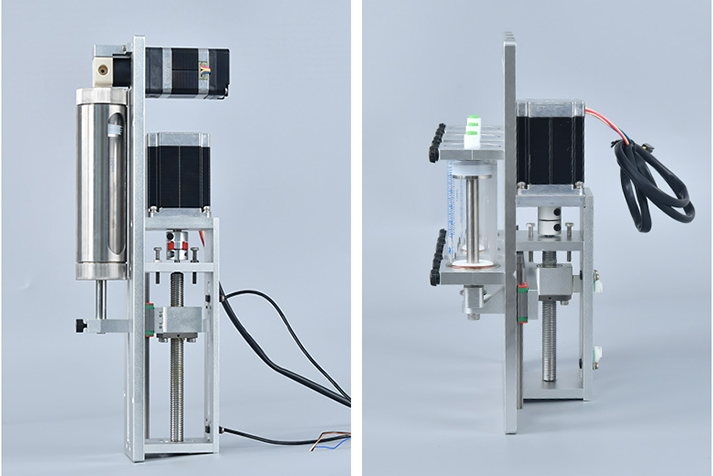
Procuring the right OEM syringe pump for a specific instrument or automation application requires systematic pre-order confirmation of chemical compatibility, mechanical specifications, communication requirements, and documentation needs — and a maintenance program that protects pump performance through the instrument's service life.
Before requesting a quotation from a syringe pump OEM manufacturer, prepare and confirm the following:
Confirm the pump volume — 50 mL, 100 mL, or custom — and the target dispensing volume range and flow profile for the specific application
Confirm the required accuracy and repeatability — and verify that the selected pump specification can consistently meet these requirements across the expected operating temperature range
Confirm the liquid media name, concentration, and temperature range — and request a chemical compatibility assessment for all wetted materials including the syringe barrel, piston, seal, valve seat, outlet, and fittings
Confirm the maximum operating pressure — and verify that the selected pump's pressure rating provides adequate margin above the maximum system back-pressure
Confirm the required service life in cycles — and request cycle-life test data that demonstrates the pump's performance at or beyond the required cycle count
Confirm the communication protocol requirement — CAN bus control, RS485 communication, or RS232 — and verify that the manufacturer can provide complete command documentation, address setting methods, and error-code definitions for Python or LabVIEW integration
Confirm the mounting dimensions and envelope — and verify that the selected pump fits within the available instrument space with adequate clearance for tubing, wiring, and maintenance access
Confirm the tubing and fitting connection standard — 1/4-28UNF or other — and verify compatibility with the instrument's fluidic architecture
Confirm the documentation requirements — wetted material list, chemical compatibility table, pressure test data, cycle-life test data, communication protocol document, mounting drawing, and electrical wiring diagram
Flush the pump after aggressive or crystallizing media — residual chemical in the wetted path between operating cycles can concentrate, crystallize, or react with subsequent media, accelerating seal and valve wear
Avoid dry running unless the pump design specifically allows it — dry running without liquid lubrication increases piston and seal friction, accelerating wear and reducing service life
Validate chemical compatibility before mass deployment — bench testing with the actual chemical media at operating concentration and temperature before instrument production release prevents field reliability problems
Monitor leakage, pressure drift, and abnormal motor load as early warning indicators — these parameters change before catastrophic failure and allow preventive maintenance before downtime occurs
Use filtered liquids when particles may damage seals — particulate contamination in the liquid media is a primary cause of premature seal and valve wear in precision syringe pumps
Run periodic origin-position checks — verifying that the piston returns to the correct origin position confirms that the ball screw and motor are performing correctly and that no mechanical wear has affected positioning accuracy
Implement preventive maintenance based on cycle count rather than calendar time — a pump in a high-throughput 24/7 instrument accumulates cycles much faster than a pump in a low-volume laboratory application, and maintenance intervals should reflect actual usage
In 24/7 analytical instruments, diagnostic platforms, and industrial automation lines, the OEM syringe pump's contribution to total cost of ownership is determined not by its catalog price but by the material compatibility, seal life, valve precision, cycle-life performance, and communication integration quality that determine how long it operates reliably before requiring maintenance or replacement. Procurement managers and engineers who evaluate syringe pump OEM manufacturers on the completeness of their material documentation, the rigor of their cycle-life testing, and the quality of their communication protocol support — rather than on unit price alone — make the procurement decisions that deliver the lowest total cost of ownership across the instrument's service life.
Runze provides OEM syringe pumps, multiport valves, high-pressure solenoid valves, gastight syringes, peristaltic pumps, plastic fittings, tubing, OEM parts, R&D support, engineering design, manufacturing capability, and after-sales technical support for medical, industrial, laboratory, environmental, electronic, and automation applications.
Contact Runze today to discuss your chemical media, pressure range, syringe volume, valve material, seal requirements, cycle-life target, mounting design, communication protocol needs, and Python or LabVIEW integration requirements. Runze can help evaluate the right OEM syringe pump specification for your instrument or automation application and provide the technical documentation and supply reliability that demanding OEM integration requires.
Q1: What is an OEM syringe pump and how does it differ from a standard laboratory syringe pump?
An OEM syringe pump is a precision liquid handling module designed to be integrated into instruments or automation systems — combining a motor actuator, syringe barrel, piston, valve, fittings, sensors, controller board, and communication interface into a single module. Unlike a standard laboratory syringe pump designed for standalone bench use, an OEM syringe pump is specified for embedded integration with customizable wetted materials, communication protocols, mounting dimensions, and volume configurations that match the specific requirements of the instrument it serves.
Q2: Which materials are best for a chemically resistant syringe pump?
The best material combination depends on the specific chemical media, concentration, temperature, and cycle life requirements. Common choices include PTFE for pistons and seals where broad chemical resistance and low friction are required, PEEK for valve parts and fittings where high mechanical strength and chemical resistance are both needed, borosilicate glass for syringe barrels where chemical stability and smooth surface finish are required, and ceramic for valve sealing surfaces in high-cycle applications where wear resistance is the primary requirement.
Q3: Why do valve material and seal technology have such a large impact on OEM syringe pump lifespan?
The valve and seal are the components most directly exposed to chemical attack, pressure cycling, and mechanical wear — and their failure initiates the downtime cascade that creates the highest total cost of ownership in automated fluid systems. A seal material that is not genuinely compatible with the chemical media will swell, increase friction, and eventually leak. A valve seat with inadequate precision will develop leakage paths as it wears. Both failures affect dispensing accuracy before they create visible leakage, meaning that material incompatibility degrades instrument performance before it creates an obvious failure event.
Q4: What communication protocols should an industrial syringe pump support for automation integration?
For automation integration, engineers typically require CAN bus control for multi-node distributed systems, RS485 communication for multi-device serial networks with longer cable runs, and RS232 for simpler point-to-point control. Runze's OEM syringe pump supports RS232, RS485, and CAN communication with RS232 and RS485 baud rates from 9600 to 115200 bps and CAN baud rates from 100 Kbps to 1 Mbps — covering the full range of instrument and automation communication requirements.
Q5: Can an OEM syringe pump integrate with Python or LabVIEW control software?
Yes, integration with Python or LabVIEW is possible when the manufacturer provides complete command protocol documentation, communication manuals, address setting methods, and error-code definitions. Engineers should confirm the availability of this documentation before design-in to avoid integration delays during instrument development — and should request sample code or integration examples if available to accelerate the development process.
Q6: How should procurement managers calculate total cost of ownership for OEM syringe pump selection?
The correct TCO calculation is: pump unit price plus integration cost plus downtime cost plus maintenance cost plus replacement cost plus field service risk. A pump with a higher unit price but longer service life, genuine chemical compatibility, and clean communication integration may deliver significantly lower TCO than a cheaper pump that requires frequent seal replacement, creates dispensing drift requiring recalibration, and requires custom protocol development for integration.
Q7: Why choose Runze as a syringe pump OEM manufacturer?
Runze offers OEM syringe pump customization with 50 mL and 100 mL volume options, PTFE and borosilicate wetted components, RS232, RS485, and CAN communication, 1/4-28UNF connections, ball screw actuation, a stated 3 million-cycle no-leakage service life under water-media testing, and customization support for wetted materials, valve configuration, mounting dimensions, and communication protocols — providing the specification depth and technical support that demanding OEM instrument integration requires.


 English
 日本語
日本語 한국어
한국어 français
 Deutsch
 Español
 italiano
 русский
 português
 Türkçe
 Nederland