
86-025-5119 7362

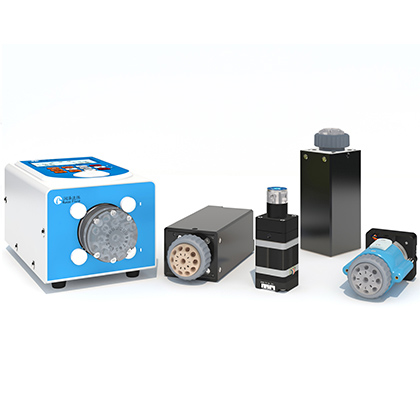
Nanjing Runze Fluid Control Equipment Co., Ltd launches new technology all-in-one ceramic switching valve which means valve stator and housing are precisely machined into a whole unit while rotor can be optionally made of ceramic or PEEK, this improved structure has been applied in our stand-alone switching valves and injector valves as well as our industrial syringe pumps.
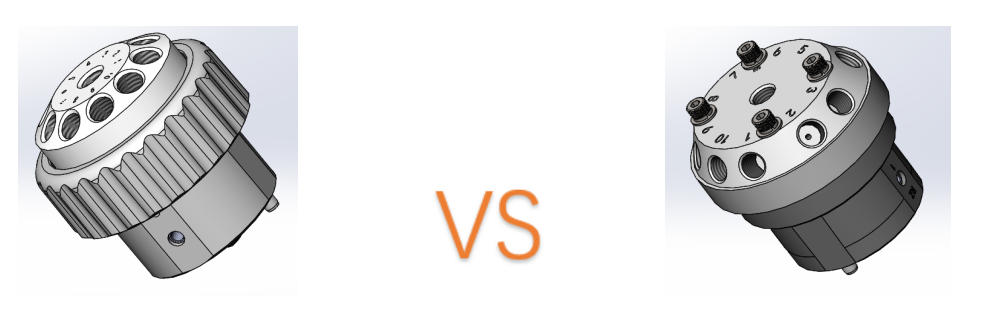
Advantage 1: The valve head structure is more rational, avoiding internal leakage problems caused by leakage during joint installation.
The TC-20C is an assembly of the valve head cover and the ceramic stator. If the joint is not tightened or is loose, water may seep into the contact surface between the stator and the valve head cover, making it impossible to observe the joint installation problem from the surface of the valve head.
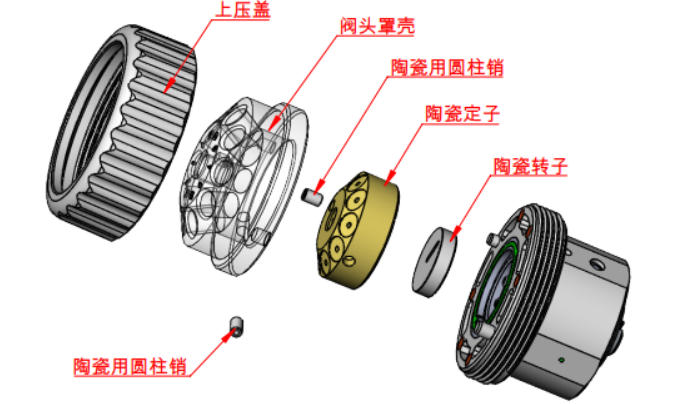
The TC20-QC's integrated ceramic valve head stator will not leak, preventing water from entering the valve head; if the connector is not tightened or is loose, liquid will overflow directly from the valve head connector, making it easy to detect connector installation problems.
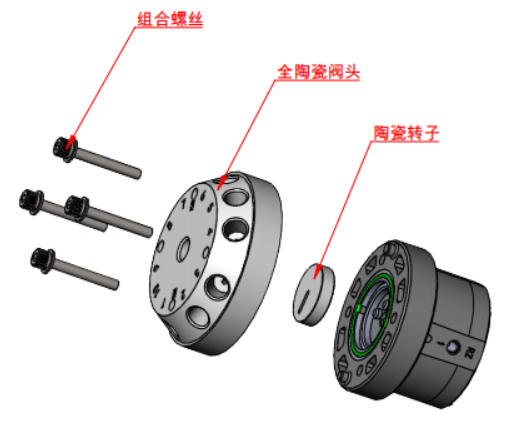
Advantage 2: The disassembly and installation of the valve head stator and rotor are more convenient, and can be done with common tools.
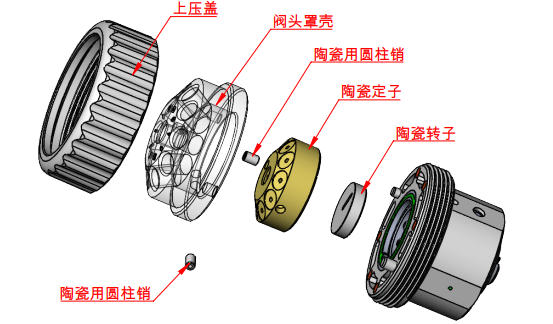
Cleaning and Replacement of the Internal Ceramic Stator and Rotor in TC-20C:
1. First, use a profile wrench to unscrew the upper pressure cover.
2. Remove the ceramic cylindrical pins on the side using a tool (destructive).
3. Push the ceramic stator out of the valve head cover; remove the rotor directly.
Cleaning and Replacement of TC20-QC Ceramic Stator and Rotor:
Use an Allen wrench to loosen the assembly screws on the top of the valve head; the integrated valve head stator and rotor can then be directly removed.
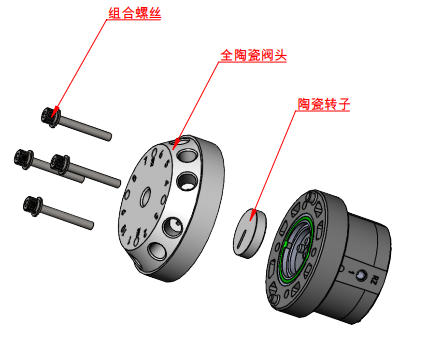
Advantage 3: All-ceramic valve heads have higher strength
Advantage 4: The TC20QC all-ceramic valve head is more adaptable to liquid and gas corrosion.
If the product is left idle for a long time, or if internal crystallization causes the rotor to stick to the stator surface, the torque generated when the motor starts will act on the cylindrical pin of the valve head in the TC-20C. Repeated starts during adsorption may cause the cylindrical pin to break, and the stator may rotate. The integrated ceramic valve head will not have this problem.
The core advantage of the all-ceramic multi-channel switching valve lies in its ability to handle demanding operating conditions such as strong corrosion, high wear, and high purity requirements, thus solving the pain points of traditional metal or polymer valves in such scenarios, such as short lifespan and susceptibility to contamination.
The specific advantages are mainly reflected in the following aspects:
1. Excellent Chemical Corrosion Resistance This is the most prominent advantage of the all-ceramic structure. The ceramic materials (such as zirconium oxide and alumina) of the valve body and core have extremely high chemical inertness, and can withstand almost all strong acids (such as 6M hydrochloric acid and 4M nitric acid), strong alkalis, organic solvents, and various corrosive chemical media, except for hydrofluoric acid. Value Proposition: In fields such as chemical engineering, pharmaceuticals, and semiconductor wet processes, fluids are often highly corrosive. All-ceramic valves can operate stably for a long time without concerns about valve body corrosion leading to leakage or sample contamination.
2. Superior Wear Resistance and Long Service Life Ceramic materials possess extremely high hardness and surface smoothness, resulting in minimal wear on the ceramic valve core during long-term, high-frequency rotational switching.
Core Technology: These valves typically employ a precision-engineered, tightly fitted seal between the stator (ceramic valve core) and rotor (ceramic valve body). Due to the wear-resistant properties of ceramics, this hard-on-hard sealing pair maintains extremely high sealing performance for extended periods, with a near-zero leakage rate and a lifespan far exceeding that of valves made from traditional materials.
Value Proposition: Significantly reduces downtime maintenance costs and replacement frequency caused by valve wear, making it particularly suitable for automated analytical or production equipment requiring continuous, high-throughput operation.
3. Withstands High Temperatures and Pressures The all-ceramic structure combined with a special fluoroplastic (such as PCTFE, PEEK) valve body enables stable operation over a wide range of temperatures and pressures.
Performance Parameter Reference: Commercially available products of this type can operate from -46℃ to 250℃ in temperature and up to 1.0MPa (water pressure) in pressure, depending on the design.
Value Proposition: Suitable for special processes involving high-temperature reactions, high-pressure transportation, or low-temperature environments.
4. Bioinertness and High Cleanliness The dense, smooth surface of ceramics makes them resistant to reaction with biomolecules and prevents ion release like metals. Value: This characteristic makes them an ideal choice for pharmaceuticals, medicine, and bioengineering. In applications requiring extremely high purity and minimal cross-contamination, such as sample analysis and drug delivery, all-ceramic valves effectively ensure sample integrity and accurate analytical results.
5. High Positioning Accuracy and Automated Integration Modern all-ceramic multi-channel switching valves are typically integrated with stepper motors and encoders to form sophisticated automated modules. Performance Parameter Reference: Positioning accuracy can reach within ±0.1%, enabling rapid and accurate switching between up to 6 to 32 channels. Simultaneously, the valve body utilizes special fluoroplastics such as PCTFE and PEEK, working in conjunction with the ceramic valve core to achieve chemical inertness throughout the entire flow path. Value Proposition: Seamless integration into automated analytical instruments (such as liquid chromatographs and chemical analyzers) or production lines, enabling automatic and precise switching of flow paths, significantly improving work efficiency and the repeatability of experiments/production.
In summary, the core value proposition of all-ceramic multi-channel switching valves can be summarized as "wear-resistant, corrosion-resistant, long-lasting, and highly pure." They are primarily used in the following fields:
Analytical instruments: such as ion chromatography, liquid chromatography, and flow injection analyzers. Biopharmaceuticals: for automated dispensing and filling of corrosive or high-purity pharmaceutical solutions.
Chemicals and semiconductors: for the precise delivery and distribution of highly corrosive chemicals.


 English
 日本語
日本語 한국어
한국어 français
 Deutsch
 Español
 italiano
 русский
 português
 Türkçe
 Nederland