
86-025-5119 7362

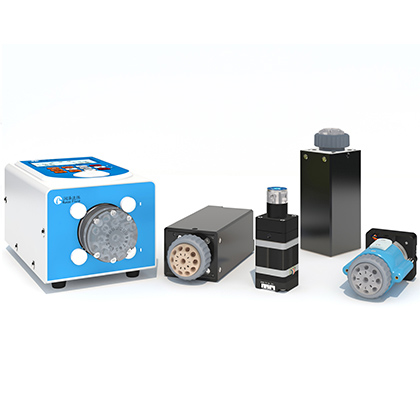
A peristaltic pump flow rate decrease after a short period of use does not automatically mean the motor or pump body has failed. In the documented BJ-RZ01B customer case, the speed setting had not changed, but the delivered flow became lower and intermittent after about two weeks. The recommended diagnostic order was tubing wear, chemical compatibility, and inlet air leakage, followed by a check of roller movement. That sequence reflects the operating principle of a peristaltic pump: the rollers repeatedly compress an elastic tube, so the condition, dimensions, installation, and recovery of that tube directly affect suction and displacement.
Quick answer: Start by installing a new, correctly sized compatible pump tube and seating both ends in the pump-head clamps. Then confirm that the liquid has not swollen or softened the tube, inspect the inlet side for loose fittings and air bubbles, and verify that the liquid level and suction arrangement are reasonable. If flow remains low with new tubing and an airtight inlet, observe whether the rollers rotate freely and collect a video, tube specification, liquid description, speed, and use history for technical review.
The pump tube is both the fluid path and the component being mechanically worked. Repeated compression can reduce wall thickness, elasticity, and rebound. If the tube does not reopen fully after a roller passes, the inlet vacuum and the volume captured between rollers can fall. The result may be a stable reduction in flow, an intermittent stream, or both. The sales experience classifies the tube as a consumable and identifies high speed, backpressure, the pumped medium, and dry running as factors that can accelerate wear.
A constant speed command therefore does not prove that volumetric output will remain constant. The BJ-RZ01B catalog gives reference flows under a defined condition: 400 rpm, water, normal temperature, and normal pressure. Those values help with initial sizing, but they are not a universal calibration curve for another liquid or a used tube. A diagnosis should compare like with like - same tube dimensions and material, same routing, same liquid, same inlet condition, same speed, and the same measurement interval.
1. Record the symptom before changing parts. Note whether the output is consistently lower or varies and breaks up. Record the liquid, tube material and dimensions, speed, operating time, duty cycle, suction arrangement, and whether the pump has run dry. Measure volume or mass over a defined time instead of relying only on visual stream appearance.
2. Replace the pump tube with a documented compatible size. The customer-case guidance places this first because tube wear and loss of rebound are common causes. Install the replacement without twisting it and seat both ends in the pump-head clamping locations. Use the product installation instructions for the RZ01B pump head rather than copying an arrangement from a different head.
3. Check chemical compatibility. A liquid that attacks or swells the tube can change occlusion and prevent full reopening. The catalog compares rubber, FKM, and silicone pump-head tubes, but compatibility still depends on the exact chemical, concentration, temperature, and exposure time. Data for a customer's exact formulation are not available in the source documents.
4. Inspect the inlet side for air entry. Tighten loose fittings, look for bubbles, confirm that the inlet tube is submerged, and examine connections for cracks or poor seating. An inlet leak can reduce suction without producing an external liquid leak. The sales source also recommends confirming that the liquid level is above the inlet where the installation allows it.
5. Verify the operating condition against catalog reference data. Confirm that the actual pump is BJ-RZ01B, that the speed is within the documented <=400 rpm range, and that the tube ID and 1.6 mm wall correspond to the intended reference-flow row. Remember that the listed flows were measured with water at normal temperature and pressure.
6. Observe the mechanical motion only after the fluid-path checks. Confirm that rollers rotate freely and that motion is not visibly irregular. If new compatible tubing and an airtight inlet do not restore stable output, provide a clear operating video or photos and the recorded conditions to technical support. Do not assume a drive fault from flow loss alone.
Observed condition | Likely area to inspect first | Verification action | What the sources establish |
Stable but lower flow at unchanged speed | Tube wear, wall thinning, reduced rebound | Fit a new compatible tube and repeat a timed measurement | Tube wear is identified as the most common cause in the customer case |
Intermittent or broken stream | Tube rebound, air bubbles, inlet leakage | Inspect the inlet, fittings, submersion, and tube seating | Sales guidance identifies air entry and bubbles as causes of unstable flow |
Weak suction after changing liquid | Chemical incompatibility or tube swelling | Review material compatibility and inspect the tube for dimensional change | Exact compatibility for the customer's liquid is not provided |
No recovery after a new tube | Installation, inlet path, or roller/drive condition | Reinstall, leak-check, observe rollers, and collect video | Further diagnosis requires evidence; motor failure is not established by flow loss alone |
The BJ-RZ01B catalog lists a four-roller RZ01B-1.6 pump head, a speed range up to 400 rpm, and a maximum reference flow of 152 mL/min. It also reports reference flow by tube inner diameter, with all listed tubes using a 1.6 mm wall. The values below were obtained at 400 rpm with water at normal temperature and pressure and are explicitly described as reference data.
Tube ID x wall (mm) | Catalog reference flow at 400 rpm | Use in troubleshooting |
0.8 x 1.6 | 15 mL/min | Confirm that a low-flow tube was not compared with a larger-ID baseline |
1.6 x 1.6 | 48 mL/min | Match tube dimensions before comparing output |
2.4 x 1.6 | 94 mL/min | Check tube label and installed part against the expected row |
3.2 x 1.6 | 152 mL/min | Treat 152 mL/min as a defined-condition maximum reference, not a universal result |
These values are useful for detecting an obvious mismatch in tube size or expectation. They do not quantify flow at lower speed, with viscous liquids, under backpressure, after tube aging, or with a different inlet lift. Data not available in source documents. For a production instrument, generate an application-specific calibration using the actual liquid, tubing lot, routing, and operating range.
The catalog provides comparative properties for compatible pump-head tube materials. Rubber is listed at about 64A hardness, FKM at about 75A, and silicone at about 55A. It also lists approximate service-life comparison values of about 1,000 hours for rubber, 500 hours for FKM, and 300 hours for silicone, together with temperature ranges of -60 to 135 C, -32 to 204 C, and -50 to 200 C respectively. These are catalog comparison values, not guaranteed replacement intervals. The customer-case guidance makes clear that speed, backpressure, the medium, and dry running influence real life.
A useful maintenance interval is therefore condition based and then refined with operating history. Record accumulated operating hours, speed, fluid, tube lot, backpressure, dry-run events, measured flow, and replacement date. Replace the tube before drift exceeds the process limit rather than waiting for visible rupture. If the liquid changes, repeat the compatibility review and baseline measurement. If the instrument is calibrated for volumetric delivery, recalibrate after changing the tube or any part of the fluid path.
Establish a new-tube baseline at the real speed, liquid, and routing used in the instrument.
Trend timed output at a consistent interval and compare it with the process acceptance limit.
Inspect the inlet path and tube seating whenever output becomes intermittent.
Avoid unnecessary dry running and investigate pressure increases or restrictions.
Keep compatible spare tubing identified by material, ID, OD, wall thickness, and part number.
If basic checks do not restore output, provide evidence that lets an engineer reproduce the condition. Include the full model, drive configuration, tube material and dimensions, liquid and concentration, speed, use time, duty cycle, inlet and outlet routing, suction height, estimated backpressure, measured flow before and after the change, and a clear video showing the pump head and stream. State whether a new tube was installed and whether bubbles were visible. This is more useful than reporting only that the pump is weak.
1. Why did flow fall even though the speed did not change?
Because the tube is part of the pumping mechanism. Wear, reduced elasticity, or chemical swelling can reduce how fully it reopens and how much liquid is displaced per roller pass. Air leakage at the inlet can also reduce delivered flow while the motor speed appears unchanged.
2. Should I replace the pump or the tube first?
For the documented BJ-RZ01B symptom, the recommended first action is to replace the tube with a correctly sized compatible part and install it properly. If stable output does not return, continue with compatibility, inlet-leak, installation, and roller checks before concluding that the pump body or drive has failed.
3. Is 152 mL/min guaranteed for every liquid?
No. The catalog identifies 152 mL/min as the maximum reference flow for the 3.2 x 1.6 mm tube at 400 rpm, measured with water at normal temperature and pressure. Viscosity, tubing condition, pressure, suction arrangement, and other system factors can change actual flow.
4. How often should BJ-RZ01B tubing be replaced?
The catalog gives approximate material-life comparison values, but the source documents do not provide a universal BJ-RZ01B replacement interval. Establish an interval from measured drift under the real speed, pressure, liquid, and duty cycle, and shorten it after dry running or other severe conditions.
5. Can I use any tube with the same inner diameter?
Not safely on that basis alone. Wall thickness, outer diameter, hardness, material, chemical compatibility, and fit in the RZ01B head affect occlusion and rebound. The catalog reference rows use a 1.6 mm wall, and the compatible assemblies specify both dimensions and material.
6. What if the flow is intermittent only at startup?
Check for trapped air, an inlet connection that draws air, incomplete tube seating, and whether the fluid path was primed consistently. The supplied sources do not define a universal startup stabilization time. Measure the behavior under a repeatable priming and timing procedure before changing control settings.
A peristaltic pump flow rate decrease on a BJ-RZ01B should be treated as a fluid-path and consumable diagnosis before it is treated as a motor failure. Start with a new compatible tube, verify chemical compatibility and installation, remove inlet air leaks and bubbles, compare the operating condition with the catalog's defined water-test reference data, and then inspect roller motion. A maintenance baseline built from the real liquid and duty cycle will detect drift earlier and produce more reliable replacement intervals than an assumed universal tube life.


 English
 日本語
日本語 한국어
한국어 français
 Deutsch
 Español
 italiano
 русский
 português
 Türkçe
 Nederland