
86-025-5119 7362

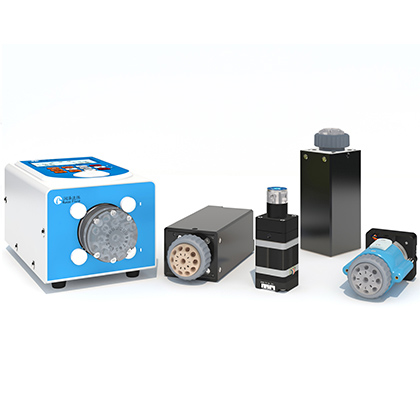
When engineers design compact analytical instruments, medical devices, or automated equipment, reducing component size is only part of the challenge. The more difficult task is maintaining stable fluid performance after the available installation space becomes smaller. A pump that fits into a limited area must still deliver consistent flow, tolerate continuous operation, and work reliably with different fluid conditions.
This is why the development of a miniature peristaltic pump requires careful engineering rather than simple size reduction. The pump structure, motor control, tubing characteristics, and mechanical movement all need to work together to achieve accurate fluid transfer within a compact footprint.
Compared with larger fluid transfer systems, miniature designs are often used in applications where every component affects the overall equipment layout. A small peristaltic pump can help engineers build more compact devices while maintaining the advantages of peristaltic technology, including fluid isolation, flexible tubing options, and suitability for precise liquid handling.
Runze Fluid focuses on precision fluid control technologies for applications that require compact and dependable pumping performance. By considering the practical requirements of different equipment designs, miniature pump configurations can be adapted to support stable operation in laboratory, medical, and industrial environments.
Making a peristaltic pump smaller creates several engineering challenges. The reduced physical space affects almost every part of the pump, from the drive mechanism and tubing path to heat management and mechanical stability.
In a conventional pump design, engineers have more room to separate components and manage mechanical stress. In a miniature peristaltic pump, the same functions must be achieved within a much smaller structure. The motor needs to provide sufficient torque, the roller or rotor mechanism needs to maintain consistent tubing compression, and the entire assembly must minimize vibration during operation.
Flow stability is another important consideration. When a pump operates at a smaller scale, slight variations in mechanical movement or tubing response can have a noticeable impact on output consistency. This is particularly important for equipment that relies on accurate dosing, sampling, or reagent delivery.
A compact pump also needs to match the environment where it will be installed. Medical instruments, laboratory analyzers, and portable devices often have strict limitations on available space, power consumption, and maintenance access. A properly designed small peristaltic pump must consider these conditions from the beginning instead of being adapted afterward.
| Design Aspect | Standard Peristaltic Pump | Miniature Peristaltic Pump |
|---|---|---|
| Installation Requirement | Suitable for systems with more available space | Designed for compact devices and limited installation areas |
| Main Design Priority | General fluid transfer performance | Balance between size, accuracy, and integration flexibility |
| Typical Operating Environment | Industrial systems and larger equipment | Medical devices, laboratory instruments, portable equipment |
| Engineering Focus | Flow capacity and general durability | Mechanical precision, low power consumption, compact reliability |
| Integration Approach | Installed as an independent component | Designed to work closely with the complete device structure |
The key challenge in miniature pump development is finding the right balance. A smaller pump should not simply occupy less space; it should maintain the level of control required by the equipment it supports.
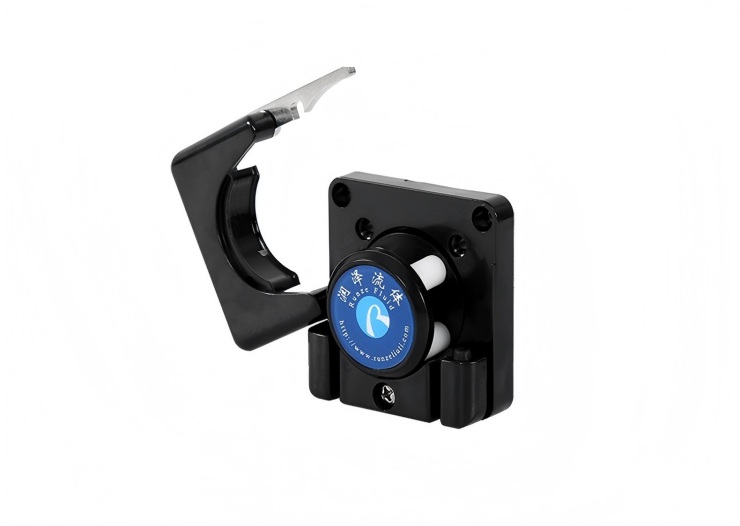
Many modern instruments work with small liquid volumes where inaccurate transfer can influence the entire process. In these applications, flow consistency is often more important than maximum pumping capacity.
A miniature peristaltic pump offers an advantage because the fluid remains inside the tubing rather than contacting the internal drive components. This separation helps reduce contamination risks and makes the pump suitable for applications involving sensitive liquids.
For laboratory instruments, accurate fluid movement is necessary for tasks such as sample preparation, reagent dispensing, and analytical testing. A small variation in liquid delivery may affect measurement results or experimental repeatability.
A small peristaltic pump allows engineers to design compact systems while maintaining controlled fluid transfer. Through appropriate tubing selection and motor adjustment, the pump can be configured for different flow requirements without significantly increasing equipment size.
This combination of compact structure and controlled operation makes miniature peristaltic pumps suitable for systems where installation space is limited but fluid accuracy cannot be compromised.
Reliability in a compact pump depends on how well multiple design factors work together. A smaller structure leaves less room for design errors, making component selection and mechanical balance especially important.
The motor is one of the primary factors affecting pump performance. It must provide stable rotation while maintaining appropriate energy efficiency. Precise speed control helps maintain consistent flow output, especially in applications requiring repeatable liquid delivery.
The pump head design also affects long-term performance. The roller or rotor mechanism must apply suitable pressure to the tubing without causing unnecessary deformation. Excessive compression may shorten tubing life, while insufficient compression can reduce flow accuracy.
For a small peristaltic pump, heat management is another consideration. Compact equipment often has limited internal airflow, so the pump design must account for operating temperature and continuous use conditions.
Runze Fluid evaluates these engineering factors when developing fluid handling solutions for different applications. Engineers can review available pump configurations through the Runze Fluid product portfolio when selecting options for compact equipment designs.
The integration of fluid components can become one of the most difficult stages in compact equipment development. A pump that performs well independently may still create challenges if its size, connections, or control method do not match the overall system.
A miniature peristaltic pump simplifies integration by providing a compact fluid control option that can be positioned more easily within limited equipment space. Since the fluid only contacts the tubing, engineers have more flexibility when designing the internal fluid pathway.
This is particularly valuable in medical and laboratory equipment, where sensors, electronics, and mechanical components must share a restricted internal area. A smaller pump can help designers create more efficient layouts without sacrificing fluid control performance.
A small peristaltic pump can also support modular equipment development. When product designs evolve, compact pump structures make it easier to adjust fluid systems without requiring major changes to the entire device architecture.
Tubing is not simply an accessory in a peristaltic pump system. It directly affects flow accuracy, chemical compatibility, and operating life.
A miniature peristaltic pump relies on repeated tubing compression to move fluid. Because of this operating principle, tubing material must withstand mechanical stress while maintaining the required elasticity and shape recovery.
Different applications require different tubing characteristics. Chemical processing systems may prioritize resistance to aggressive fluids, while medical or laboratory applications may focus on cleanliness and compatibility with sensitive samples.
The relationship between tubing and pump design determines overall performance. A properly matched tubing solution helps maintain stable flow, reduce unnecessary wear, and improve the consistency of fluid transfer.
For a small peristaltic pump, tubing selection becomes even more important because the compact mechanism depends on precise interaction between tubing flexibility and pump movement.
The value of a miniature peristaltic pump becomes clear in equipment where size limitations and performance requirements exist at the same time.
In medical devices, compact pumps support controlled fluid movement in systems where reliability and space efficiency are both essential. In laboratory instruments, they enable automated liquid handling processes without requiring large pumping assemblies.
Analytical equipment also benefits from miniature pump technology because these systems often depend on repeatable sample movement and accurate reagent delivery. Consistent fluid transfer helps improve the stability of testing procedures.
Industrial automation applications can also use a small peristaltic pump when clean fluid isolation, flexible tubing options, and controlled dosing are required.
As equipment designs continue moving toward smaller and more integrated structures, compact pumping solutions provide engineers with more options for building efficient fluid handling systems.
For application-specific requirements, customers can discuss pump selection and integration considerations with Runze Fluid through the company’s contact page.
Developing compact fluid systems requires more than reducing the physical size of a pump. The real challenge is maintaining accurate flow control, mechanical stability, and long-term operating reliability within a smaller structure.
A miniature peristaltic pump provides a practical solution for applications where installation space is limited but precise fluid transfer remains essential. By combining compact design with suitable tubing, motor control, and mechanical engineering, these pumps help support more efficient medical, laboratory, and industrial equipment.
For engineers selecting a small peristaltic pump, understanding the relationship between pump design and application requirements is the key to achieving stable and repeatable fluid performance.
A miniature peristaltic pump is a compact pump that moves fluid by compressing flexible tubing, providing controlled transfer while keeping the fluid separated from the internal mechanism.
A small peristaltic pump is designed for applications where installation space is limited while maintaining accurate and stable fluid delivery.
They are commonly used in medical devices, laboratory instruments, analytical equipment, automation systems, and precision dosing applications.
Tubing affects flow stability, chemical resistance, durability, and the overall operating performance of the pump system.
Yes. With proper motor control and tubing selection, a small peristaltic pump can achieve accurate and repeatable fluid delivery.
Selection should consider required flow rate, fluid characteristics, installation space, tubing requirements, and integration conditions.


 English
 日本語
日本語 한국어
한국어 français
 Deutsch
 Español
 italiano
 русский
 português
 Türkçe
 Nederland