
86-025-5119 7362

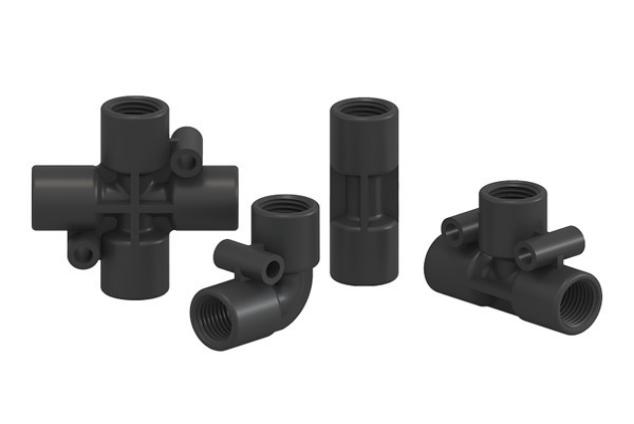
PEEK fittings and stainless steel fittings serve different purposes in fluidic systems. Stainless steel fittings are preferred for applications requiring extreme mechanical strength and very high pressure resistance, while PEEK fittings offer significant advantages in chemical compatibility, biocompatibility, corrosion resistance, and ease of installation. For analytical instruments, HPLC systems, and laboratory fluid handling applications, PEEK fittings are often the better choice because they reduce the risk of contamination, simplify maintenance, and provide reliable connections with delicate tubing.
Choosing between a PEEK fitting and a stainless steel fitting depends on the working environment, including chemical exposure, temperature, pressure requirements, tubing material, and system sensitivity. Understanding the differences between these materials helps engineers select the right connection solution for long-term performance.
The main difference between PEEK and stainless steel fittings lies in their material properties and application focus.
Stainless steel fittings are known for their excellent mechanical strength and durability. They are commonly used in industrial systems where high pressure, heavy-duty operation, and structural stability are critical.
PEEK fittings are manufactured from polyether ether ketone, an advanced engineering polymer with outstanding chemical resistance and dimensional stability. They are widely used in analytical instruments, pharmaceutical equipment, and laboratory systems where fluid purity and chemical compatibility are more important than maximum mechanical strength.
| Feature | PEEK Fittings | Stainless Steel Fittings |
|---|---|---|
| Chemical resistance | Excellent against many solvents and chemicals | Good but may react with certain aggressive chemicals |
| Biocompatibility | Excellent for biological applications | Depends on stainless steel grade |
| Weight | Lightweight | Heavier |
| Installation | Easy hand-tight installation available | Usually requires tools |
| Electrical insulation | Non-conductive | Conductive |
| Typical applications | HPLC, laboratory analysis, microfluidics | Industrial high-pressure systems |
For precision fluid handling, the material choice should match the application rather than simply selecting the strongest option.
PEEK fittings are widely used in high-performance liquid chromatography because HPLC systems require stable, contamination-free fluid connections.
In HPLC applications, even small dead volumes, chemical interactions, or connection inconsistencies can affect separation performance and analytical accuracy. PEEK fittings provide several advantages:
Excellent resistance to commonly used HPLC solvents
Compatibility with biological and pharmaceutical samples
Low risk of metal ion contamination
Easy installation and replacement
Reliable sealing with small-diameter tubing
Many analytical systems use PEEK fittings hplc configurations because PEEK provides a balance between chemical stability and practical operation. Unlike metal connections, PEEK components are less likely to introduce unwanted interactions with sensitive samples.
For laboratories frequently changing tubing or modifying fluid paths, PEEK fingertight fittings are especially valuable because they allow secure connections without specialized tools.
For many chemical handling applications, PEEK fittings provide better chemical resistance than stainless steel fittings.
Stainless steel performs well in many environments, but exposure to certain solvents, acids, or corrosive chemicals may cause surface degradation or contamination concerns depending on the material grade.
PEEK has excellent resistance to a wide range of chemicals, including many organic solvents used in analytical and laboratory applications. This makes PEEK a preferred material for systems where maintaining fluid purity is essential.
However, chemical compatibility should always be evaluated based on:
Chemical concentration
Operating temperature
Exposure duration
Pressure conditions
PEEK is highly reliable for many laboratory and analytical applications, but extremely aggressive chemicals or high-temperature conditions may require specialized materials.
PEEK fittings are typically the better choice when the system requires:
For pharmaceutical, biological, and analytical testing systems, preventing contamination is critical. PEEK minimizes the risk of metal-related interference.
A laboratory system may require frequent tubing replacement or configuration adjustments. A PEEK fitting with fingertight capability allows faster installation and reduces maintenance time.
PEEK components reduce overall system weight and are suitable for compact instruments and complex tubing layouts.
Some applications require electrically insulating materials or avoid metal contact with fluids. PEEK provides an effective alternative.
Although PEEK fittings offer many advantages, stainless steel fittings remain important for specific applications.
Stainless steel is often preferred when:
Extremely high pressure is required
Mechanical strength is the primary consideration
The system operates in harsh industrial environments
Metal compatibility is already verified
For example, industrial hydraulic systems and high-pressure processing equipment often rely on stainless steel because the mechanical requirements exceed typical laboratory applications.
The correct choice is based on the complete system design rather than material preference alone.
PEEK fingertight fittings are designed to simplify installation while maintaining reliable sealing performance.
Traditional metal fittings may require tools and precise torque control during installation. In contrast, fingertight designs allow operators to create secure connections manually, which is particularly useful in laboratories where tubing changes are frequent.
Benefits include:
Faster installation
Reduced risk of overtightening
Easier maintenance
Better compatibility with delicate tubing
For HPLC and analytical systems, this convenience can significantly reduce downtime during instrument setup and maintenance.
Selecting the right fitting requires evaluating several operating factors:
Confirm that the fitting material can withstand all solvents and fluids used in the system.
Check whether the fitting can handle the operating pressure and safety requirements.
Evaluate both continuous operating temperature and possible temperature fluctuations.
Ensure the fitting matches tubing materials, dimensions, and connection requirements.
For analytical and biological applications, prioritize materials that minimize contamination and sample interaction.
A well-selected fitting improves system reliability and reduces long-term maintenance costs.
Yes. PEEK fittings are widely used in HPLC systems because they provide chemical resistance, low contamination risk, and reliable connections.
No. Stainless steel generally provides higher mechanical strength, especially for extreme pressure applications. PEEK is optimized for chemical compatibility and precision fluid handling.
PEEK fingertight fittings are commonly used for laboratory instruments, HPLC systems, and applications requiring quick, tool-free tubing connections.
In many analytical and laboratory applications, yes. However, the final choice depends on pressure, temperature, and chemical requirements.
With proper material selection and operating conditions, PEEK fittings can provide long-term reliable performance in fluidic systems.
PEEK fittings and stainless steel fittings each have their own advantages. Stainless steel remains the preferred solution for high-pressure industrial environments where maximum mechanical strength is required. PEEK fittings, however, provide unique benefits for precision fluid handling, including excellent chemical resistance, biocompatibility, lightweight design, and easy installation.
For HPLC, analytical instruments, and laboratory fluid systems, PEEK fittings are often the more suitable choice because they support cleaner, more reliable, and easier-to-maintain fluid connections. Selecting the right fitting material based on application requirements ensures better system performance and long-term reliability.



 English
 日本語
 한국어
 français
 Deutsch
 Español
 italiano
 русский
 português
 Türkçe
 Nederland