
86-025-5119 7362

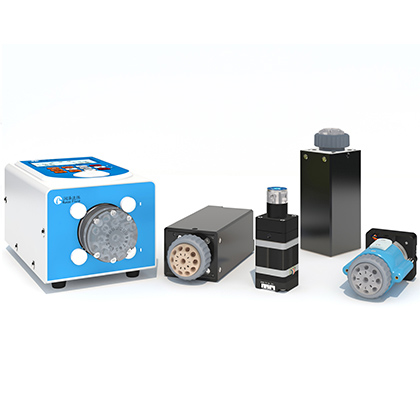

Magnetic encoder vs optical encoder selection matters in syringe pumps and multiport valves because position feedback affects reset behavior, repeatability, contamination tolerance, cost, and maintenance risk. The source document states that Runze syringe pumps and multiport valves have changed to magnetic encoders because a magnetic encoder reads position and angle from magnetic field changes and can detect position without finding a reset position first.
The source document lists lower cost, stronger resistance to dust and oil leakage, no reset-position requirement, better repeatability, and suitable positioning accuracy in current switching valve and injection pump products. No numeric resolution, accuracy, life, or temperature values are provided. Data not available in source documents.
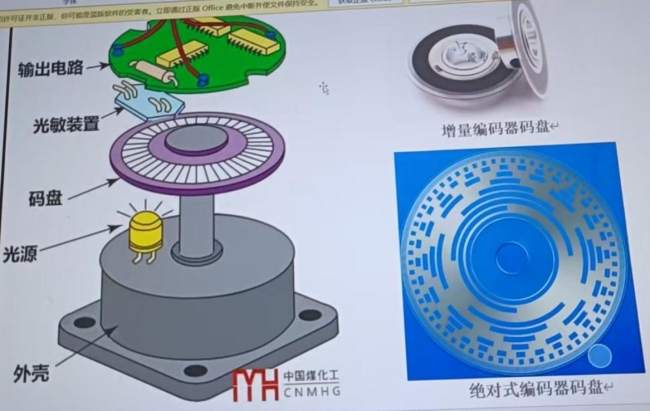
An optical encoder uses an LED, photo-sensor, and slotted or coded disc. It can provide very high precision in clean environments. A magnetic encoder reads angular position from magnetic field changes. It is generally more tolerant of dust, oil, moisture, shock, and vibration.
For Runze syringe pumps and multiport valves, the source document supports magnetic encoders because they do not require a reset position, are lower cost than photoelectric encoders, and resist common contamination around fluidic devices.
Optical encoders generate signals by interrupting or modulating light. Fine optical patterns can support high native resolution, but the optical path can be affected by dirt, oil, moisture, and mechanical damage to the disc.
Magnetic encoders use a magnetized element and magnetic sensor. As the shaft rotates, the sensor reads magnetic field changes. The source document notes that each circular position has different magnetic information, allowing detection at any time.
Criteria | Optical encoder | Magnetic encoder |
Sensing method | Light source, photo-sensor, coded disc | Magnetic field and sensor |
Clean-environment precision | Very high | Moderate to high depending on design |
Dust/oil/moisture resistance | Lower | Higher for non-magnetic contaminants |
Reset behavior | May require reset/reference | Source states no reset position required |
Robustness | More sensitive to shock and contamination | Stronger against vibration and physical stress |
Cost/size | Larger and higher cost in source comparison | Lower cost, compact, lightweight |
Interference | Optical path affected by contamination | External magnetic fields require attention |
Fluidic pumps and valves operate near tubing, fittings, seals, reagents, and moving mechanical parts. Dust, oil leakage, water vapor, or residue can affect optical paths. The source document states that photoelectric encoders are susceptible to interference, while magnetic encoders are more resistant to dust and oil leakage.
No-reset-position behavior is also useful. If a device must always return to a reference point before knowing position, reset time and reset failure become part of system behavior. Magnetic position detection can reduce this dependency.
Optical encoders remain useful when maximum precision is required and the environment is clean and protected. Examples include protected laboratory motion systems, semiconductor equipment, high-precision machine tools, or clean high-speed mechanisms. For fluidic pumps and valves, the decision should balance precision against contamination, service, and reset behavior.
- Choose based on the real operating environment, not only theoretical resolution.
- Check for dust, oil, moisture, reagent residue, or leakage near the sensor.
- Confirm whether position must be known immediately after power-up.
- Keep magnetic encoders away from strong external magnetic fields or high-current wiring.
- Request model-specific data when accuracy or repeatability is critical. Data not available in source documents.
What is the main difference between magnetic and optical encoders?
Optical encoders use light; magnetic encoders use magnetic field changes.
Why did Runze change to magnetic encoders?
The source document cites lower cost, stronger contamination resistance, no reset-position requirement, and suitable positioning performance.
Are magnetic encoders always more accurate?
No. Optical encoders can offer very high precision in clean environments. Product-specific numeric data are not provided.
Can magnetic encoders be affected by interference?
Yes. External magnetic fields may require shielding or layout control.
Which encoder is better near dust or oil?
Based on the source document, magnetic encoders are better suited for dust, oil leakage, and moisture exposure.
Does the source provide numeric accuracy?
No. Data not available in source documents.
Magnetic encoder vs optical encoder selection is a trade-off between maximum clean-environment optical precision and robust position detection in real fluidic systems. For Runze syringe pumps and multiport valves, the source document supports magnetic encoders because they reduce reset-position dependence, improve resistance to dust and oil leakage, lower cost, and provide suitable positioning performance in current products.


 English
 日本語
日本語 한국어
한국어 français
 Deutsch
 Español
 italiano
 русский
 português
 Türkçe
 Nederland