
86-025-5119 7362

A single drop of leaked fluid can compromise an entire analytical process. In precision fluid handling systems, the smallest connection failure can lead to inaccurate test results, sample contamination, wasted materials, or unexpected equipment downtime. Behind every stable fluid transfer process is a connection solution designed to deliver consistent sealing performance and long-term reliability.
This is where luer fittings play a critical role. Designed for secure and efficient fluid connections, luer fittings provide a standardized interface that allows tubing, syringes, valves, pumps, and analytical components to work together with greater accuracy and stability. Their precision structure helps reduce leakage risks while supporting smooth and controlled fluid transfer across various applications.
As fluid systems become more compact and sophisticated, connection requirements continue to evolve. Traditional connection methods may not always provide the flexibility, reliability, and space efficiency required by modern laboratory and analytical equipment. Advanced solutions such as luer to threaded fittings combine the convenience of luer connections with the added mechanical strength of threaded designs, making them suitable for demanding environments where connection security is essential.
From research laboratories and diagnostic platforms to advanced analytical instruments, reliable fluid connections are the foundation of accurate performance. Runze Fluid provides precision-engineered fluid connection solutions that help engineers and researchers build more stable, efficient, and dependable fluid handling systems.
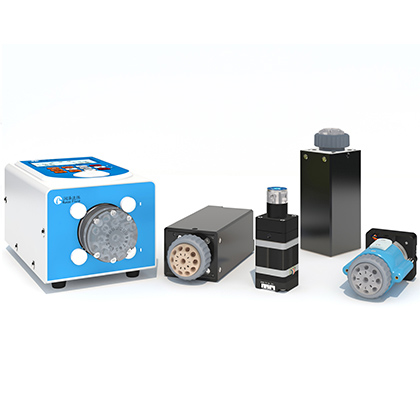
Runze Fluid’s complete range of fluid products designed for reliable performance in laboratory and analytical fluid systems.
In any fluid handling system, the connection interface determines how effectively fluids can move between different components. Luer fittings are widely used because they provide a simple yet highly reliable method for connecting tubing, syringes, valves, pumps, and analytical instruments.
The standardized tapered structure of luer connections allows different components to achieve consistent alignment and sealing performance. This makes them especially valuable in applications where precision, repeatability, and contamination prevention are essential.
Unlike complex connection methods that may require specialized tools or complicated installation procedures, luers fittings offer convenient assembly and replacement. Their compact design also makes them suitable for systems where installation space is limited, including laboratory instruments and analytical equipment.
For applications that require enhanced mechanical stability, luer to threaded fittings provide an improved connection solution. By combining a luer interface with threaded engagement, these fittings help maintain secure connections under vibration, repeated operation, and changing pressure conditions.
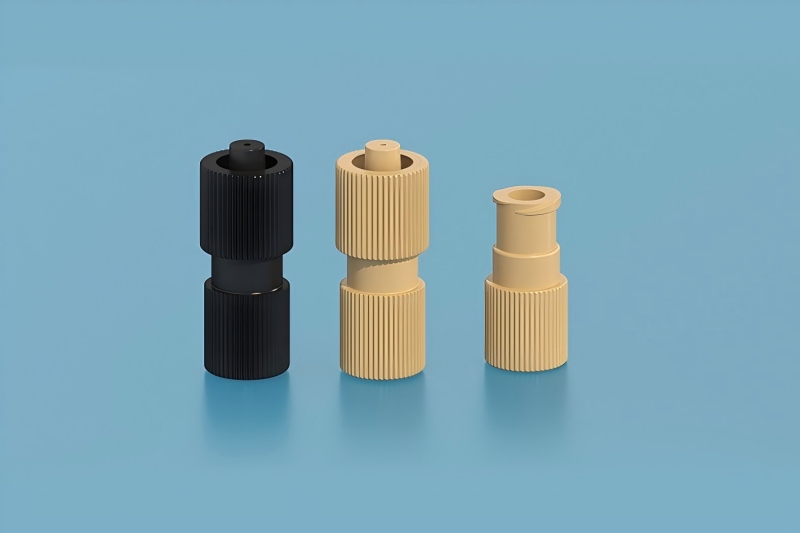
Leakage prevention is one of the most important considerations when designing fluid handling systems. Even small leaks may affect sample quality, reduce measurement accuracy, or introduce unwanted contamination into sensitive processes.
High-quality luer fittings minimize these risks through precision manufacturing and optimized sealing structures. The tapered connection design creates reliable contact between mating components, helping maintain a stable seal during fluid transfer.
Locking mechanisms provide additional security by reducing the possibility of accidental separation. In more demanding applications, luer to threaded fittings offer stronger mechanical retention, making them suitable for systems that require long-term connection stability.
| Connection Type | Main Design | Reliability Advantages | Typical Applications |
|---|---|---|---|
| Standard Luer Fittings | Tapered push connection | Fast installation and wide compatibility | Laboratory tubing and general fluid connections |
| Luer Lock Fittings | Tapered connection with locking thread | Improved connection security and reduced disconnection risk | Analytical equipment and precision fluid systems |
| Luer to Threaded Fittings | Luer interface combined with threaded structure | Higher mechanical strength and enhanced stability | Pumps, valves, and complex fluid assemblies |
| Barbed Fittings | Barbed tube gripping design | Strong tubing retention | General tubing applications |
The reliability of precision luer fittings depends heavily on accurate design and manufacturing consistency. In high-precision fluid applications, even small dimensional variations can influence sealing performance, flow control, and system durability.
A precision tapered geometry ensures consistent contact between connected components and supports dependable sealing. Threaded locking structures, especially in luer lock and luer to threaded fittings designs, provide additional protection against accidental loosening.
Internal flow path optimization is another important design consideration. Smooth internal surfaces help reduce unnecessary fluid retention and support more accurate liquid transfer. Compact structures also allow easier integration into modern analytical systems where available space is limited.
Runze Fluid focuses on precision engineering and reliable connection design to support stable performance across laboratory and analytical fluid handling applications.
The material used in luers fittings directly influences chemical resistance, durability, and application compatibility. Different fluid systems may involve solvents, chemicals, biological samples, or high-purity liquids, requiring carefully selected materials.
Polypropylene is widely used because of its good chemical resistance and lightweight characteristics. Polycarbonate provides higher mechanical strength and transparency for applications requiring visual inspection. PTFE offers excellent resistance to aggressive chemicals, while POM provides dimensional stability and reliable mechanical performance.
When selecting luer to threaded fittings, engineers should consider fluid compatibility, operating temperature, pressure conditions, and tubing materials. Proper material selection helps prevent deformation, cracking, chemical damage, and premature connection failure.
Due to their flexibility and reliability, luer fittings are widely used in laboratory and analytical fluid systems where accurate fluid control is essential.
In chromatography systems, luer fittings provide dependable connections between tubing and fluid pathways to maintain consistent sample movement. In sample preparation equipment, they support accurate liquid handling processes. Research instruments use these fittings to create flexible experimental setups, while diagnostic systems rely on secure fluid connections to maintain reliable operation.
Pumps, valves, and precision fluid assemblies also benefit from luer-based connection technology because it allows efficient system integration and easier maintenance. For applications requiring additional support, luer to threaded fittings deliver improved stability while maintaining connection flexibility.
Selecting the correct luer fittings requires understanding the specific requirements of the fluid handling system. The right choice depends on connection type, material compatibility, tubing specifications, and operating conditions.
Standard luer fittings are suitable for general applications where quick connection and compatibility are important. Luer lock designs provide additional security, while luer to threaded fittings are ideal when stronger mechanical fixation is needed.
Engineers should also evaluate the characteristics of the transported fluid, including chemical properties, temperature range, and pressure requirements. Choosing the appropriate fitting design can improve reliability, reduce maintenance frequency, and extend system service life.
Runze Fluid provides precision fluid connection products for different laboratory and analytical applications. For professional support in selecting suitable components, you can discuss your specific fluid connection requirements with Runze Fluid.
Reliable connections are the foundation of efficient fluid handling systems. With their standardized structure, precision sealing capability, and wide compatibility, luer fittings provide a dependable solution for applications requiring accurate and stable fluid transfer.
From laboratory research systems to advanced analytical instruments, luers fittings help reduce leakage risks and improve connection consistency. For more demanding applications, luer to threaded fittings provide enhanced mechanical strength while maintaining the flexibility of traditional luer interfaces.
By selecting suitable materials, connection structures, and fitting designs, engineers can achieve better system performance and long-term reliability. With precision-focused fluid solutions, Runze Fluid supports customers in building more efficient and dependable fluid handling systems.
Luer fittings are used to connect fluid components such as tubing, syringes, valves, pumps, and analytical instruments while ensuring secure fluid transfer.
Luer fittings improve reliability through standardized designs, precise sealing structures, and secure connection methods that reduce leakage and disconnection risks.
Luer to threaded fittings are used when a system requires both luer compatibility and stronger mechanical connection through threaded fixation.
Common materials include polypropylene, polycarbonate, PTFE, and POM, selected according to chemical resistance and application requirements.
Luer fittings are commonly used in laboratories, analytical instruments, chromatography systems, medical devices, pumps, and precision fluid control systems.
The selection should consider connection type, fluid compatibility, tubing size, pressure requirements, temperature conditions, and the operating environment.


 English
 日本語
日本語 한국어
한국어 français
 Deutsch
 Español
 italiano
 русский
 português
 Türkçe
 Nederland