
86-025-5119 7362

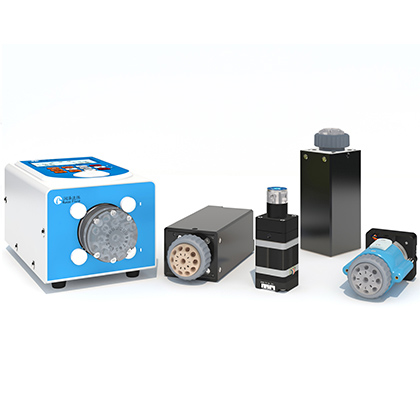
Selector valves play a pivotal role in fluid control systems, enabling the connection, cut-off, and reversing of hydraulic oil flow, along with pressure unloading and sequential action control. A selector valve, such as a rotary selector valve or pressure selector valve, is a directional control valve featuring multiple flow forms and oil ports. Its primary function is to modify the on-off state of each oil port through the movement of the valve core, thereby managing the connection, disconnection, and direction changes within the oil circuit.
Selector valves are categorized based on various parameters, allowing for precise application in diverse industries:
By Valve Core Movement: Selector valves are classified into slide valves and rotary selector valves, depending on how the valve core moves relative to the valve body.
By Operation Mode: Based on operation types, selector valves include manual, motorized, electromagnetic, hydraulic, and electro-hydraulic variants.
By Core Positions: Selector valves are available in two-position, three-position, and multi-position designs.
By Oil Ports: Multi-port selector valves are further divided into 2-port, 3-port, 4-port, and 5-port types based on the number of oil inlet and outlet ports on the valve body.
By Installation Method: Selector valves can be installed as plate-type, pipe-type, or flange-type directional valves.
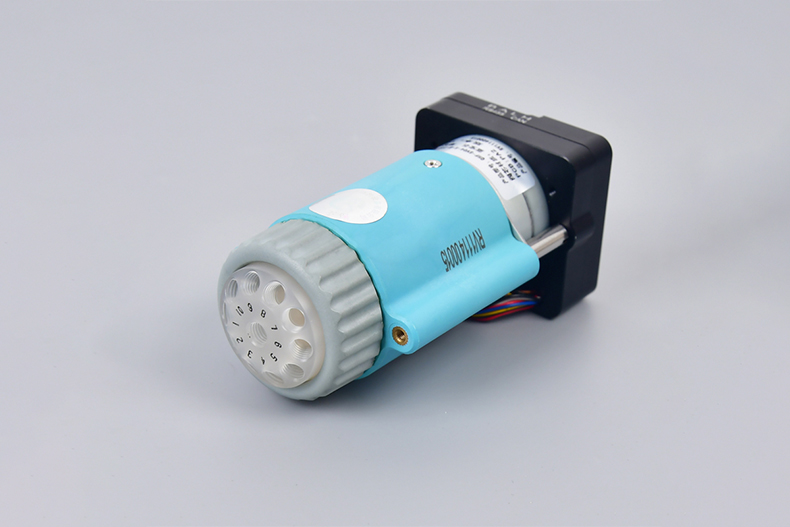
Petroleum, Chemical, Mining, and Metallurgy Industries: In these industries, pressure selector valves and 6-port selector valves are essential for fluid directional control. These valves are commonly installed in pipelines carrying lubricating oil in thin oil lubrication systems. By altering the position of the sealing assembly within the valve body, users can connect or disconnect each channel, thus facilitating fluid flow reversal, start-up, or shutdown processes.
Powder and Pneumatic Conveying Systems: The 3-port selector valve is especially significant in powder and pneumatic conveying systems, where precise reversal of material direction is required. Pneumatic control adjusts the shaft baffle to direct the flow of powder within the channel effectively.
General Performance and Usage: Selector valves, including rotary selector valves, are known for their accurate response, stable performance, and high degree of automation. However, their complex structure featuring drive and cooling systems may be more suited for applications requiring advanced fluid management. Simpler valve disc structures, on the other hand, are ideal for processes involving smaller flow capacities.
By understanding the classifications and tailored applications of selector valves such as the rotary selector valve and pressure selector valve, industries can maximize operational efficiency, ensuring reliable and precise fluid handling in diverse systems.


 English
 日本語
日本語 한국어
한국어 français
 Deutsch
 Español
 italiano
 русский
 português
 Türkçe
 Nederland