
86-025-5119 7362

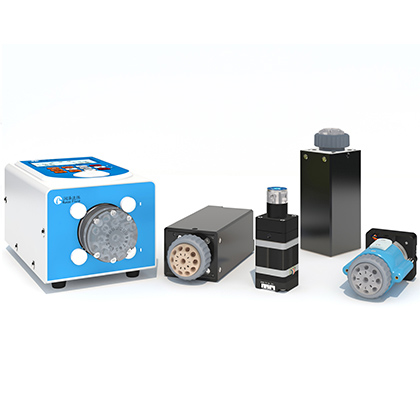
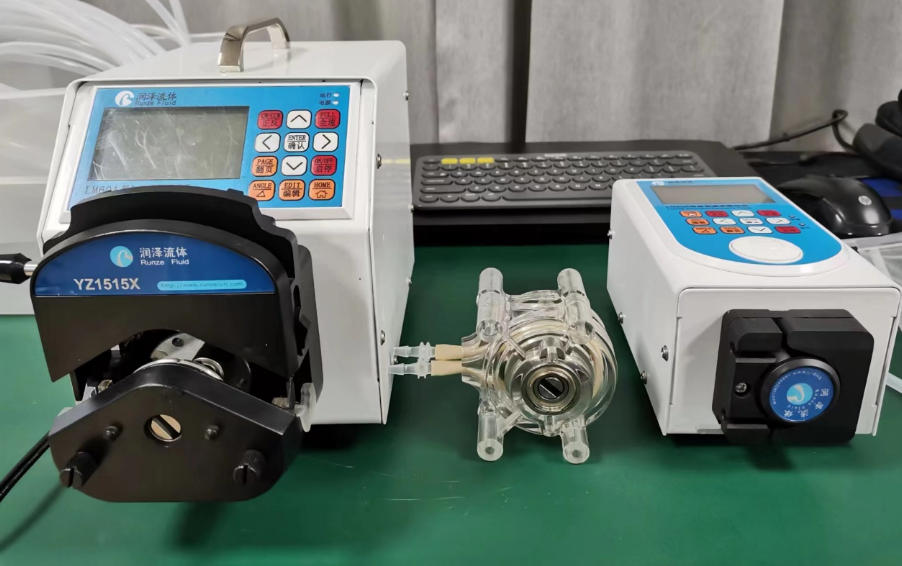
In many fluid delivery applications, understanding the pump head is crucial to achieving the desired performance. The peristaltic pump head refers to the vertical height to which a pump can lift liquid, playing a critical role in selecting the right pump configuration and ensuring proper fluid flow.
2.1 What is the Head (of a Pump or a Water Column)?
Head refers to the effective pressure head of a pump—the net energy increase per unit mass of fluid passing through the pump. In simpler terms, it represents the maximum height that a peristaltic pump can deliver liquid.
Head is influenced by factors like liquid pressure, flow velocity, and inlet/outlet height, and can be calculated using the formula:
Head Calculation Formula:
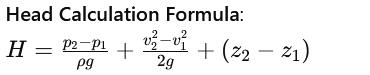
Where:
· H = Head (m)
· p₁, p₂ = Pressure at pump inlet and outlet (Pa)
· v₁, v₂ = Flow velocity at pump inlet and outlet (m/s)
· z₁, z₂ = Height difference at pump inlet and outlet (m)
· ρ = Liquid density (kg/m³)
· g = Gravitational acceleration (m/s²)
For peristaltic pumps, since the inlet and outlet diameters are typically the same, we can approximate and simplify the formula to:
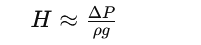 Where:
· ΔP = Pressure difference (Pa) between the pump inlet and outlet.
This simplified formula helps determine the effective head based on the outlet pressure and fluid density.
2.2 Head Calculation Formula and Simplification
The general fluid mechanics formula for head in peristaltic pumps is:
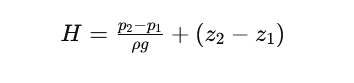
Since the flow velocity at the inlet and outlet is approximately the same, the term (v₂² - v₁²)/2g is often negligible, simplifying the calculation.
In practice, the head is largely determined by the pump outlet pressure, which is essential when designing peristaltic pump systems.
3.1 Test Conditions:
· Medium: Pure water
· Power Supply: 24V adapter
· Test Location: Runze Comprehensive Laboratory
3.2 Calculation Results and Measured Data:
Pump Head Model | Theoretical Head (m) | Actual Head (Measured) |
SN Series | 20.41 m | 20.25 m |
YZ Series | 20.41 m | 20.25 m |
RZ Series | 15.3 m | 13.5 m |
For example, for the YZ Series:
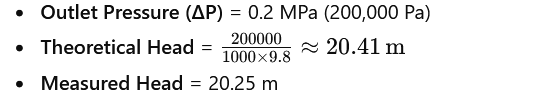
This confirms that the theoretical head closely matches the actual performance in real-world conditions.
3.3 Deriving Required Pressure from Customer's Desired Head
When customers specify the head (vertical height) required for fluid delivery, the outlet pressure can be calculated using the formula:
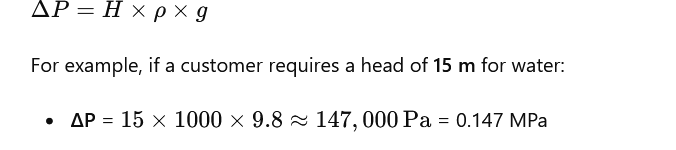
This means a peristaltic pump with an outlet pressure of at least 0.147 MPa is needed (e.g., YZ Series can meet this requirement).
The tubing diameter significantly impacts the achievable head. Based on experimental data, we derived the following empirical formula:
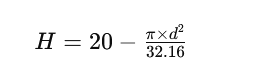
Where d is the inner diameter of the tubing (in mm), and H is the head (in meters).
For example, to achieve a head of 10 m, the required tubing inner diameter can be calculated by solving for d:
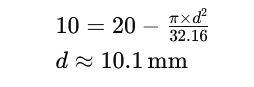
Thus, tubing with an inner diameter of 9.6 mm (or close to 10 mm) is recommended for this application.
5.1 Liquid Density
The density of the liquid affects the head calculation. A higher liquid density results in a lower achievable head for the same outlet pressure. This relationship is captured in the formula H=ΔPρgH = \frac{{\Delta P}}{{\rho g}}H=ρgΔP.
Final Recommendation:
The pump head is a crucial parameter in determining the vertical height to which a liquid can be delivered. Understanding the relationship between head, tubing diameter, and liquid properties is essential for selecting the correct peristaltic pump for specific applications.
For complex systems involving high-viscosity fluids or long-distance delivery, simulated tests or consultations with technical support are recommended to ensure optimal pump performance.



 English
 日本語
日本語 한국어
한국어 français
 Deutsch
 Español
 italiano
 русский
 português
 Türkçe
 Nederland